
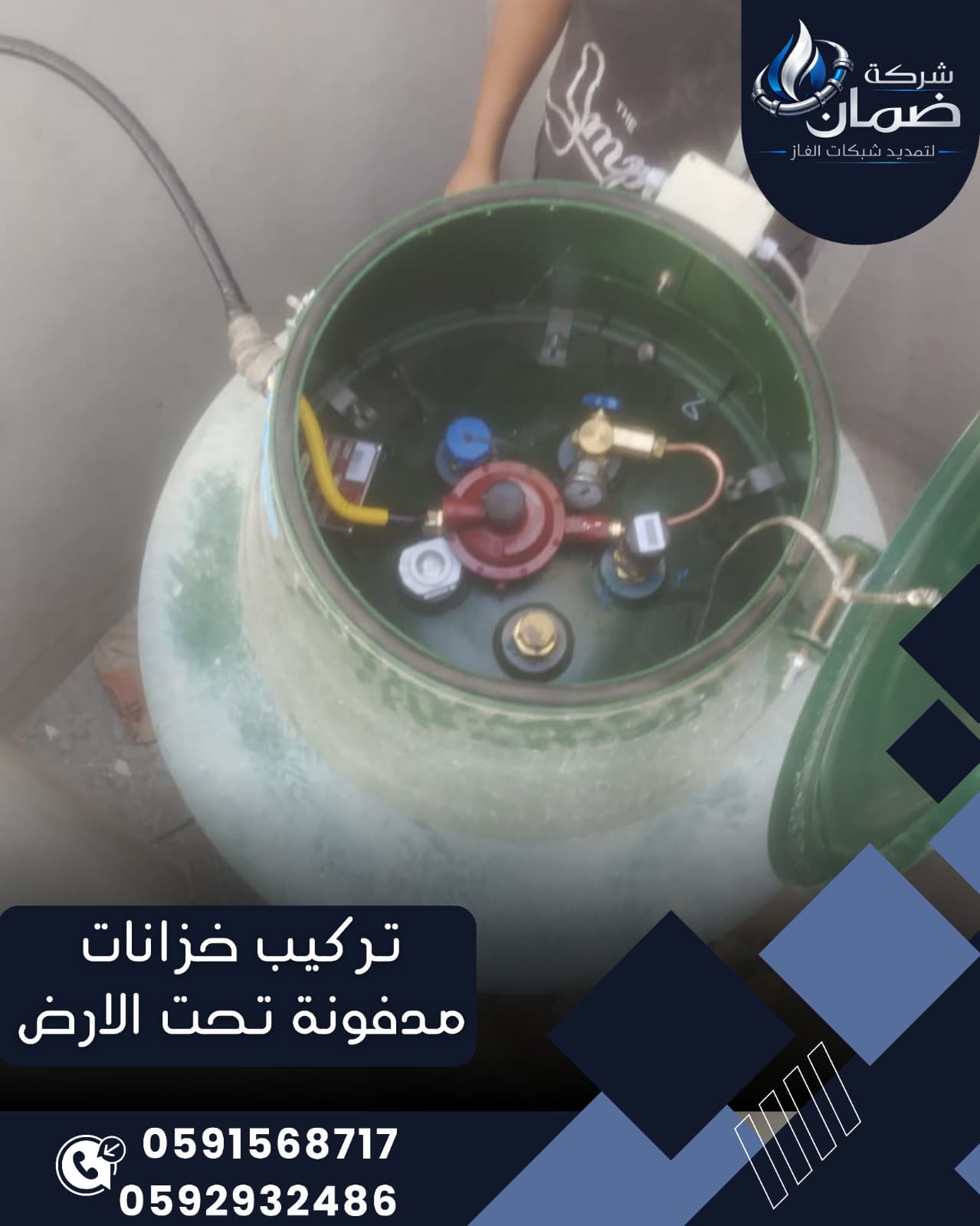
Selecting the right type of gas storage tank is one of the most important engineering decisions when implementing any gas distribution project, whether for a home, villa, restaurant, factory, commercial facility, or industrial complex. Many property owners ask the same question before starting their project: Which is better, an underground gas tank or an above-ground gas tank? The correct answer is never based on choosing one system as universally superior. Instead, it depends on the nature of the facility, available installation space, projected gas consumption, safety requirements, project budget, and future expansion plans. Based on extensive practical experience in designing and installing gas systems throughout Saudi Arabia, a proper comparison should never focus solely on the purchase price of the storage tank. It should evaluate the complete lifecycle of the project, including operational efficiency, maintenance requirements, long-term safety, installation complexity, durability, and compliance with Saudi engineering standards. Only a comprehensive engineering assessment can identify the most suitable solution that will continue serving the facility safely and efficiently for many years.
Which Is Better: Underground or Above-Ground Gas Tanks?
This is one of the most frequently asked questions before beginning any gas installation project, yet there is no universal answer because every project has unique engineering requirements. Underground gas tanks are generally preferred for facilities that prioritize architectural appearance or require large storage capacities while maximizing the use of surrounding outdoor space. In contrast, above-ground gas tanks provide simpler installation, easier routine inspections, faster maintenance access, and lower initial installation costs. Consequently, selecting the appropriate system should always be based on the operational requirements of the project rather than assuming one solution is automatically better than the other.
Based on extensive engineering experience, villas, luxury residences, resorts, and residential compounds often benefit more from underground gas storage because the tank remains completely hidden beneath the surface while providing additional protection from weather conditions and preserving the property's exterior appearance. On the other hand, restaurants, workshops, and facilities requiring frequent inspections and easy maintenance access often benefit from above-ground installations because technicians can quickly inspect valves, regulators, and safety equipment without excavation.
Engineers must also evaluate soil conditions, available land, future expansion possibilities, Saudi Civil Defense requirements, accessibility for maintenance personnel, and overall facility design before recommending the appropriate storage solution. Ignoring these engineering factors frequently results in selecting a system that increases future operating costs or limits future expansion opportunities.
Real-world engineering projects consistently demonstrate that the best gas tank is not determined by appearance or purchase price but by selecting the storage solution that best satisfies the technical and operational requirements of the entire project.
• Select the storage system according to the operational needs of the facility.
• Evaluate both current and future operating requirements.
• Consider available land and architectural planning.
• Compare the complete lifecycle of the project rather than installation cost alone.
• Base every decision on a comprehensive engineering assessment.
Comparing Gas Storage Tanks for Commercial Facilities
Commercial and industrial facilities have operating requirements that differ significantly from residential properties. Consequently, comparing gas storage tanks for commercial applications requires careful evaluation of multiple engineering criteria rather than focusing on one characteristic alone. Engineers assess installation procedures, maintenance accessibility, storage capacity, future expansion capability, safety performance, operational reliability, and long-term ownership costs before recommending the most appropriate storage solution.
Based on practical engineering experience, above-ground gas tanks offer maintenance teams excellent accessibility for routine inspections, pressure regulator servicing, safety valve testing, and preventive maintenance while generally requiring lower installation costs than underground systems. Underground tanks, however, provide superior use of available space, enhanced physical protection, and improved architectural integration for facilities where aesthetics and site planning are important considerations.
Long-term operating costs should also be evaluated because underground systems often require greater initial investment while providing valuable long-term advantages for many commercial projects. Above-ground systems, meanwhile, offer greater flexibility whenever future modifications, relocation, or network expansion become necessary.
Real-world engineering experience consistently demonstrates that successful comparisons must evaluate every stage of the project—from engineering design and installation through long-term maintenance and operational efficiency—rather than focusing solely on initial construction.
• Compare installation and lifetime operating costs.
• Evaluate maintenance accessibility and inspection requirements.
• Consider future expansion plans.
• Analyze long-term service life for each storage option.
• Select the system providing the highest operational efficiency.
Best Gas Tank for Restaurants
Restaurants depend heavily upon uninterrupted gas supply to maintain continuous kitchen operations. Therefore, selecting the appropriate gas storage tank requires achieving maximum operational reliability while ensuring convenient maintenance without disrupting daily business activities. No single storage solution is suitable for every restaurant because the correct choice depends upon kitchen size, appliance quantity, daily gas consumption, available installation space, and future expansion plans.
Based on extensive engineering experience, small and medium-sized restaurants often benefit from above-ground gas tanks because routine inspections and maintenance can be completed quickly without excavation, minimizing downtime and simplifying servicing. Large restaurants, hotels, catering facilities, and commercial kitchens with higher gas consumption may benefit from underground gas storage because larger capacities can be installed while preserving valuable outdoor space and maintaining an attractive facility appearance.
Engineers must also consider accessibility for gas delivery vehicles, maintenance procedures, compatibility with gas distribution systems, pressure regulators, safety valves, and emergency protection equipment to ensure stable gas supply throughout periods of intensive kitchen operation.
Real-world engineering projects consistently demonstrate that successful restaurant gas systems depend primarily upon comprehensive engineering design rather than simply selecting one storage method over another.
• Select storage according to kitchen size and operational demand.
• Evaluate actual daily gas consumption.
• Ensure convenient maintenance and gas delivery access.
• Integrate storage with complete gas safety systems.
• Design the installation through qualified engineering specialists.
Best Gas Tank for Factories
Factories require gas storage systems capable of delivering exceptional reliability while supporting continuous industrial operations under demanding working conditions. For this reason, selecting a gas storage tank depends on much more than storage capacity alone. Engineers evaluate production processes, operating schedules, the number of production lines, anticipated gas consumption, safety requirements, and future expansion plans before recommending the most appropriate storage solution. Every industrial project therefore begins with a comprehensive engineering assessment that determines the actual thermal demand, peak operating loads, and long-term production objectives.
Based on extensive engineering experience, many industrial facilities benefit from underground gas tanks because they maximize usable site space while protecting the storage system from environmental exposure, particularly in factories where production areas require efficient site planning. Other industrial facilities, however, prefer above-ground storage because maintenance personnel can quickly inspect equipment, perform preventive servicing, and carry out repairs without interrupting industrial operations or performing excavation work.
The selected storage system must also integrate perfectly with industrial gas pipelines, pressure regulators, fire protection systems, gas leak detection equipment, and emergency shut-off devices while allowing maintenance activities to be performed without disrupting production schedules. This integrated engineering approach significantly reduces operational downtime and improves overall production reliability.
Real-world engineering experience consistently demonstrates that factories relying on professional engineering studies when selecting gas storage systems achieve greater production stability, lower maintenance costs, and improved long-term operational efficiency.
• Evaluate industrial operating loads before selecting the storage system.
• Choose storage capacity capable of supporting continuous production.
• Integrate the tank with complete industrial safety systems.
• Ensure maintenance can be performed without interrupting production.
• Include future expansion within the original engineering design.
Choosing the Right Gas Storage Tank
Selecting the right gas storage tank should never be based solely on comparing prices or storage capacities. Instead, engineers evaluate a complete range of technical and operational criteria to ensure the selected tank fully satisfies the project's functional requirements. The evaluation begins with a detailed analysis of expected gas consumption, operating conditions, available installation space, applicable Saudi safety regulations, and long-term operational objectives.
Based on extensive practical experience, engineers carefully assess every factor affecting system performance before recommending either an underground or above-ground storage solution. These evaluations include installation accessibility, soil conditions, gas demand, the number of supply points, expansion possibilities, maintenance requirements, and gas delivery schedules. Long-term operating and maintenance costs are also analyzed so that the final decision reflects total lifecycle value rather than initial purchase price alone.
Selecting the right installation contractor is equally important because the quality of engineering design and installation directly influences operational safety, system reliability, maintenance requirements, and overall service life.
Real-world engineering experience consistently demonstrates that projects beginning with comprehensive engineering planning achieve significantly better long-term performance than projects relying on assumptions or incomplete technical evaluations.
• Analyze the complete operational requirements of the project.
• Evaluate installation conditions before selecting the storage system.
• Compare long-term operating and maintenance costs.
• Consider future maintenance accessibility.
• Work with experienced engineering specialists.
Advantages of Underground Gas Tanks
Underground gas tanks offer numerous engineering advantages that make them the preferred solution for many residential, commercial, and institutional projects, particularly where preserving the architectural appearance of the property is an important objective. Because the storage tank remains completely below ground level, outdoor areas remain available for landscaping, parking, walkways, recreational facilities, or future construction without compromising gas storage capacity.
Based on extensive engineering experience, underground tanks also benefit from additional protection against direct sunlight, severe weather conditions, accidental impacts, and other environmental influences. When installed according to approved engineering standards using proper cathodic protection systems and corrosion-resistant coatings, underground tanks provide exceptional durability together with a long operational service life.
These systems are particularly well suited for luxury villas, hotels, resorts, residential compounds, institutional buildings, and commercial developments requiring large storage capacities while maintaining high architectural standards and efficient site utilization.
Real-world engineering projects consistently demonstrate that the long-term benefits of underground gas storage become increasingly valuable in projects emphasizing sustainability, aesthetics, and long-term operational reliability.
• Preserve the architectural appearance of the property.
• Maximize the use of available outdoor space.
• Provide additional protection against environmental exposure.
• Deliver exceptionally long operational service life.
• Ideal for premium residential and commercial developments.
Advantages of Above-Ground Gas Tanks
Above-ground gas tanks provide several practical advantages, beginning with significantly faster installation compared with underground systems. Because every component remains fully accessible, routine inspections, preventive maintenance, repairs, and equipment replacement can be completed quickly and efficiently. For this reason, above-ground storage remains an excellent solution for projects requiring rapid installation or regular engineering inspections.
Based on practical engineering experience, above-ground tanks also simplify visual inspection procedures because technicians can immediately identify abnormal conditions, corrosion, or equipment concerns without excavation. Future modifications, equipment upgrades, and system expansions can likewise be completed much more efficiently, providing additional operational flexibility for facilities expecting future growth.
Installation costs are generally lower because excavation, engineered foundations, waterproofing systems, protective backfilling, and underground corrosion protection are unnecessary. These advantages make above-ground storage an economical solution for numerous residential, commercial, and industrial applications.
Real-world engineering projects consistently demonstrate that above-ground gas storage offers exceptional operational flexibility, particularly for facilities requiring regular maintenance, frequent inspections, or future expansion.
• Faster and simpler installation.
• Easy routine inspection and preventive maintenance.
• Lower initial installation costs.
• Simplified future modifications and expansion.
• Excellent operational flexibility for growing facilities.
Cost of Underground vs. Above-Ground Gas Tanks
Project cost is one of the most influential factors when selecting a gas storage system. However, a proper engineering comparison should never be based solely on the purchase price or installation cost. Instead, engineers evaluate the total lifecycle cost of the system, including installation, operation, maintenance, service life, reliability, and future expansion. In many cases, a storage system with a higher initial investment may ultimately prove more economical because it reduces maintenance expenses, minimizes operational interruptions, and delivers greater long-term efficiency.
Based on extensive engineering experience, underground gas tanks require additional civil and mechanical work, including excavation, reinforced foundations, corrosion protection systems, cathodic protection, waterproofing, engineered backfilling, and comprehensive commissioning procedures. These additional engineering requirements naturally increase the initial installation cost. Above-ground tanks, by comparison, require significantly less site preparation, resulting in lower construction costs, faster installation schedules, and easier relocation or modification whenever operational requirements change.
However, evaluating a gas storage project properly requires consideration of many additional factors beyond construction expenses. Engineers assess long-term maintenance costs, accessibility for inspection, expected service life, operational reliability, utilization of available site space, and the effect of each storage system on future facility expansion. These considerations directly influence the total return on investment over the lifetime of the project. Consequently, the correct engineering decision should always be based on operational value rather than simply selecting the lowest-priced option.
Real-world engineering projects consistently demonstrate that successful investments balance installation cost, operating efficiency, maintenance accessibility, long-term durability, and optimal site utilization instead of focusing exclusively on the initial project budget.
• Compare the complete lifecycle cost of the project.
• Include installation and long-term maintenance expenses.
• Never base the decision solely on initial purchase price.
• Evaluate long-term return on investment.
• Select the solution providing the greatest operational value.
Types of Central Gas Storage Tanks
Central gas storage systems are available in several different configurations, each designed to satisfy specific engineering and operational requirements. These include underground storage tanks, above-ground storage tanks, industrial gas tanks, and storage systems developed for residential and commercial applications. Every configuration possesses unique engineering characteristics that make it suitable for particular operating environments. Consequently, no single storage system can be considered universally superior for every project.
Based on extensive engineering experience, selecting the appropriate storage system begins with a detailed evaluation of the project's operational requirements, including anticipated gas consumption, the number of supply points, Saudi Civil Defense requirements, available installation space, and future expansion plans. Engineers also ensure full compatibility between the selected storage tank, gas distribution pipelines, pressure regulators, safety valves, gas leak detection systems, and fire protection equipment to achieve reliable, integrated system performance.
Storage tanks also differ considerably in manufacturing materials, corrosion protection technologies, inspection procedures, maintenance requirements, and structural design. Therefore, professional engineering consultation is essential before making a final decision, particularly for commercial and industrial facilities where uninterrupted gas supply is critical for daily operations.
Practical engineering experience consistently demonstrates that selecting the correct storage system during the initial planning stage reduces operating costs, improves long-term safety, extends service life, and enhances the reliability of the complete gas distribution network.
• Select the storage system according to project requirements.
• Analyze gas consumption before determining the storage configuration.
• Ensure compliance with approved Saudi safety regulations.
• Integrate storage with complete gas protection systems.
• Base every design on a comprehensive engineering assessment.
Best Gas Storage System for Commercial Facilities
There is no single gas storage solution that can be considered ideal for every commercial or industrial facility because every project has unique operational objectives, production demands, available space, budget limitations, and safety requirements. The most effective gas storage system is therefore the one that achieves the optimal balance between operational efficiency, maintenance accessibility, long-term reliability, and total lifecycle cost.
Based on extensive engineering experience, large industrial facilities frequently benefit from underground storage systems whenever maximizing available land and accommodating large storage capacities become primary objectives. Conversely, facilities requiring greater maintenance flexibility, rapid equipment access, or future relocation often achieve better results using above-ground storage systems. In certain projects, hybrid engineering solutions may also be recommended after evaluating the specific operational characteristics of the site.
The engineering decision extends beyond selecting the storage tank itself. It includes designing the complete gas distribution network, positioning pressure regulators, installing safety valves, integrating gas leak detection systems, coordinating fire protection equipment, and establishing preventive maintenance programs. Long-term project success depends upon the seamless integration of all these engineering components.
Real-world engineering projects consistently demonstrate that superior results are achieved whenever experienced engineering specialists design the complete gas storage system according to the facility's operational requirements rather than selecting equipment independently.
• Select the storage solution according to facility operations.
• Evaluate both current and future production demands.
• Design a fully integrated gas distribution system.
• Incorporate complete safety and protection systems.
• Rely on experienced engineering specialists throughout the project.
Why Is Guarantee Gas the Best Gas Installation Company in Saudi Arabia?
Guarantee Gas Company specializes in designing and installing every type of gas storage system throughout Saudi Arabia, including both underground and above-ground gas tanks. Every project begins with a comprehensive engineering evaluation that analyzes site conditions, expected gas consumption, operational requirements, and applicable safety regulations before recommending the storage solution that provides the highest level of efficiency, reliability, and long-term value without creating unnecessary project costs.
The company employs highly experienced engineers and certified technicians specializing in gas system design, storage tank installation, safety systems, pressure testing, electronic leak detection, and complete commissioning according to Saudi engineering standards. Every installation utilizes certified storage tanks and approved engineering equipment while complying fully with national safety regulations and quality requirements.
Guarantee Gas's commitment extends well beyond project completion. The company provides preventive maintenance programs, scheduled inspections, continuous technical support, and engineering consultation for future system expansion or modernization. These comprehensive services ensure that every gas installation continues operating safely and efficiently throughout its entire service life.
Through extensive engineering expertise, exceptional workmanship, certified installation procedures, and complete compliance with Saudi engineering standards, Guarantee Gas has earned its reputation as one of the Kingdom's most trusted providers of residential, commercial, and industrial gas installation projects.
• Conduct detailed engineering studies before selecting the storage system.
• Complete professional installation according to Saudi engineering standards.
• Use only certified storage tanks and approved engineering equipment.
• Perform pressure testing, leak detection, and commissioning before project handover.
• Provide continuous maintenance programs and long-term technical support.
Conclusion
Choosing between an underground gas tank and an above-ground gas tank should always be based on the operational requirements of the project rather than assuming one system is universally better than the other. Each storage solution offers distinct engineering advantages that make it suitable for specific applications. The correct decision begins with evaluating gas consumption, available installation space, safety requirements, maintenance expectations, and long-term operational objectives before selecting the solution that delivers the highest efficiency and greatest long-term return on investment. By working with Guarantee Gas Company, clients receive comprehensive engineering consultation, professional installation, and fully integrated gas systems designed to comply with the highest Saudi engineering and safety standards while providing dependable, efficient performance for many years.
Frequently Asked Questions
Which is better: an underground gas tank or an above-ground gas tank?
Neither system is universally better. The appropriate choice depends on the facility, available space, gas consumption, safety requirements, maintenance expectations, and project budget.
Are underground gas tanks more expensive than above-ground tanks?
Generally, yes. Underground installations require excavation, waterproofing, corrosion protection, engineered backfilling, and additional construction work, resulting in higher initial installation costs.
Which type is better for restaurants?
The ideal solution depends on kitchen size, gas consumption, available installation space, and operational requirements. A professional engineering assessment is recommended before selecting the storage system.
What is the best gas storage system for factories?
Industrial gas storage should be selected according to production demand, operating loads, safety requirements, and future expansion plans through a comprehensive engineering evaluation.
Are maintenance procedures different for underground and above-ground tanks?
Yes. Above-ground tanks provide easier inspection and maintenance access, while underground systems require specialized inspection and preventive maintenance programs.
How do I choose the right gas tank for my facility?
The decision should be based on a complete engineering assessment that evaluates gas demand, available space, operating conditions, safety requirements, maintenance expectations, and long-term project objectives.
Why should I choose Guarantee Gas Company?
Guarantee Gas provides comprehensive engineering studies, professional system selection, certified installation, pressure testing, leak detection, preventive maintenance programs, and continuous technical support while maintaining full compliance with Saudi engineering standards to ensure maximum safety, efficiency, and long-term reliability.