
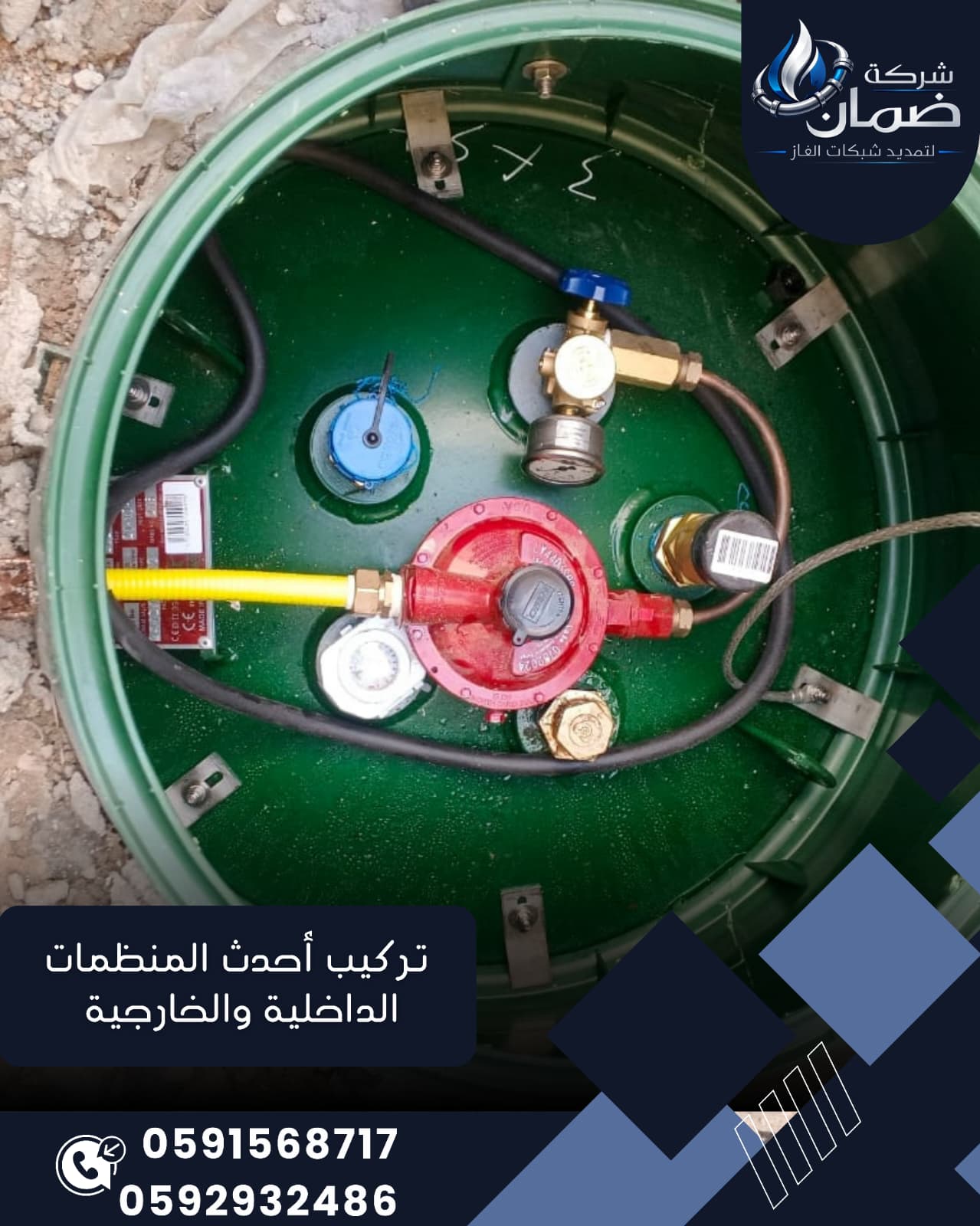
A gas regulator is one of the most critical components of any central gas distribution system because it is responsible for reducing the pressure of gas coming from the storage tank to a safe and stable level suitable for operating different appliances. However, many homeowners and business owners assume that all gas regulators perform the same function, while in reality they differ in installation location, flow capacity, operating mechanism, and level of safety protection. Choosing the right regulator therefore should never be based solely on price or appearance. Instead, it should be determined by studying the type of property, the number of connected appliances, total gas demand, and the applicable safety requirements in Saudi Arabia. Based on extensive practical experience in designing and installing central gas systems, selecting the correct regulator significantly improves overall system performance, minimizes operational issues, and ensures the highest possible level of safety.
The Difference Between Internal and External Gas Regulators
Understanding the difference between an internal gas regulator and an external gas regulator begins with understanding the role each one performs within a gas distribution system. The external regulator is typically installed close to the gas storage tank or the main supply point, where its primary function is to reduce the high pressure coming from the tank to an intermediate pressure suitable for the next stage of the pipeline. The internal regulator, on the other hand, is installed inside the building or close to the gas appliances, where it performs the final pressure adjustment required by stoves, ovens, water heaters, or industrial equipment. This two-stage regulation system provides much greater pressure stability throughout the entire network.
Based on practical experience in designing gas systems for homes, villas, restaurants, and commercial facilities, using both regulators together in large projects is not an optional enhancement but an engineering necessity. During peak demand periods when multiple appliances operate simultaneously, relying on only one regulator may cause pressure fluctuations that reduce equipment efficiency and increase the likelihood of operational problems.
The two regulators also differ in terms of durability and environmental resistance. External regulators are specifically designed to withstand direct sunlight, dust, humidity, and changing weather conditions, while internal regulators are engineered to provide extremely accurate final pressure control inside the building. Replacing one type with the other is considered a serious technical mistake that may negatively affect the safety and efficiency of the entire gas system.
Real-world project experience consistently demonstrates that gas networks designed according to proper engineering standards using the appropriate regulators achieve significantly more stable performance while requiring fewer emergency maintenance interventions than improperly designed systems.
• The external regulator controls the pressure coming from the storage tank.
• The internal regulator provides the final pressure required by gas appliances.
• Each regulator is designed with specifications appropriate for its installation location.
• Selecting the correct regulator improves the efficiency of the entire gas system.
• Proper engineering design reduces failures while improving operational safety.
Best Gas Regulator for Homes in Saudi Arabia
There is no single gas regulator brand that can be considered the best solution for every residential property because the best gas regulator for homes in Saudi Arabia is the one selected according to the actual requirements of the gas network rather than its commercial brand name. The number of gas appliances, pipeline length, daily gas consumption, storage tank capacity, and system design all directly influence the selection of the correct regulator.
Practical experience in residential gas system installation shows that large villas require completely different regulator specifications compared to apartments or smaller homes. Properties equipped with outdoor kitchens, multiple water heaters, barbecue stations, or several cooking appliances require regulators capable of maintaining stable gas pressure despite higher demand. In addition, the regulator should comply with recognized international manufacturing standards and certifications to ensure long-term reliability and safe operation.
Choosing a gas regulator solely because it is less expensive is a common mistake. Lower-priced products often compromise on internal component quality or pressure regulation accuracy, which may eventually result in appliance performance issues or premature replacement. For this reason, professional gas companies always begin by calculating the actual system requirements before recommending the most suitable regulator.
Field experience consistently confirms that investing in a high-quality regulator from the beginning significantly reduces future maintenance costs while providing more reliable operation and enhanced overall safety.
• Select the regulator according to the property's actual gas demand.
• Consider the total number of gas-powered appliances.
• Choose certified products that comply with recognized standards.
• Never use price alone as the deciding factor.
• Consult qualified specialists to calculate your gas system requirements.
Gas Regulators for Restaurants and Commercial Facilities
Restaurants and commercial facilities require completely different gas regulation solutions compared to residential buildings because gas consumption remains consistently high while several appliances operate simultaneously, including commercial ovens, grills, fryers, and industrial cooking equipment. Any pressure drop under these conditions may directly affect cooking quality, production efficiency, and daily operations. As a result, these facilities require gas regulators specifically engineered to handle higher flow capacities while maintaining stable pressure throughout extended operating hours.
Based on practical experience in commercial kitchen gas installations, selecting the correct regulator begins with calculating the combined gas load of every appliance connected to the system. Engineers determine the expected maximum gas flow before selecting a regulator capable of supplying the network without experiencing pressure loss during peak operation. Additional safety devices such as emergency shutoff valves and automatic protection systems are also integrated in accordance with Saudi safety regulations.
Commercial kitchens and food service facilities also require scheduled preventive maintenance programs that include regulator performance testing, pressure verification, and inspection of all gas connections. Continuous operation naturally causes wear over time, making regular inspection essential to maintaining system efficiency and operational safety.
Real project experience demonstrates that commercial gas systems designed around properly sized regulators deliver stable equipment performance, minimize unexpected breakdowns, and allow restaurants and commercial facilities to maintain maximum productivity even during the busiest operating periods.
• Select regulators based on the total calculated gas load.
• Ensure stable gas pressure for every commercial appliance.
• Fully comply with Saudi gas safety requirements.
• Perform regular inspection and preventive maintenance.
• Design commercial gas systems through experienced engineering specialists.
How to Choose the Right Gas Regulator
Choosing the right gas regulator is one of the most important decisions affecting both the efficiency and safety of any gas distribution system. Selecting a regulator with the wrong flow capacity or operating pressure may result in poor appliance performance, unstable operation, or excessive gas pressure that shortens the lifespan of the entire system. For this reason, professional gas engineering companies never rely on estimation alone. Instead, they begin by calculating the total gas demand of every connected appliance, determining the expected consumption rate, measuring pipeline lengths, evaluating the number of gas outlets, and then selecting the regulator that best matches the technical requirements of the project.
Based on extensive experience in central gas installations across Saudi Arabia, residential properties require completely different regulator specifications than restaurants, factories, hotels, and commercial kitchens. As the number of simultaneously operating appliances increases, the regulator must be capable of maintaining stable pressure without fluctuations that could affect equipment performance. Engineers also consider storage tank pressure, gas type, installation location, and environmental operating conditions before making the final recommendation.
It is equally important to ensure that the selected regulator carries recognized certifications and complies with applicable international manufacturing standards. The regulator should also be suitable for Saudi Arabia's environmental conditions, particularly in regions experiencing extremely high temperatures. Professional gas companies normally provide a technical report explaining why a particular regulator has been selected, giving the client complete confidence in the engineering decisions behind the installation.
Practical field experience consistently proves that selecting a regulator based on proper engineering calculations significantly increases system efficiency, minimizes future failures, and extends the operational lifespan of the complete gas network.
• Study the property's actual gas demand before selecting the regulator.
• Calculate the total connected appliance load accurately.
• Choose the proper regulator capacity for every facility.
• Use certified regulators that comply with approved standards.
• Allow qualified engineers to perform the final equipment selection.
Central Gas Regulator Price
Many customers search for the price of a central gas regulator before beginning their project. However, there is no single fixed price because several technical factors determine the final cost. These include regulator capacity, operating pressure, manufacturing quality, brand reputation, project size, installation requirements, and the type of property, whether it is a house, villa, restaurant, commercial facility, or industrial project.
Practical experience shows that selecting the lowest-priced regulator often results in choosing equipment that cannot properly support the required gas demand. This may eventually lead to unstable appliance performance, additional maintenance costs, or early replacement. Professional gas companies therefore never begin with pricing alone. Instead, they first inspect the site, perform engineering calculations, recommend the most appropriate regulator, and only then prepare an accurate quotation.
Installation costs, pressure testing, commissioning, and future maintenance should also be considered when evaluating project costs. The quality of installation is equally as important as the quality of the regulator itself because improper installation may eliminate all the performance advantages provided by even the highest-quality equipment.
Real project experience demonstrates that investing in a certified regulator together with professional installation reduces future repair costs while ensuring stable, reliable, and safe operation for many years.
• Pricing varies according to regulator capacity.
• Project type directly affects equipment selection.
• Professional installation is part of the total investment.
• Certified equipment delivers better long-term value.
• Engineering inspection should always precede pricing.
Certified Gas Regulator Installation
Even the highest-quality gas regulator cannot deliver optimal performance unless it is installed correctly. Certified gas regulator installation is therefore just as important as selecting the regulator itself. Proper installation includes verifying gas flow direction, calibrating operating pressure, testing every connection, and ensuring complete compatibility with Saudi safety regulations and engineering standards.
Based on extensive practical experience in central gas projects, installation begins with a complete inspection of the intended regulator location to verify accessibility, environmental suitability, and future maintenance requirements. Certified fittings and approved accessories are then installed before pressure testing the entire gas system to confirm that no leaks or operational defects exist prior to commissioning.
Professional installation teams also use precision measuring equipment to calibrate gas pressure according to each project's specific operating requirements. This prevents both excessive pressure and insufficient pressure that could reduce appliance efficiency or create unnecessary operational risks.
Field experience consistently demonstrates that following professional installation procedures from the very beginning dramatically reduces future maintenance issues while ensuring maximum system efficiency and long-term operational safety.
• Installation should always be performed by certified technicians.
• Pressure testing must be completed before commissioning.
• Operating pressure should be calibrated using precision instruments.
• Approved fittings and accessories should always be used.
• Full compliance with Saudi gas safety standards is essential.
Best Gas Regulator Installation Company
When searching for the best gas regulator installation company, price should never be the only deciding factor. Engineering expertise, material quality, installation standards, and long-term technical support are equally important. A professional company begins every project by studying the customer's requirements, designing the appropriate gas network, selecting the correct regulator, supervising installation, performing comprehensive testing, and providing continuous maintenance support after commissioning.
Guarantee Gas Company has established itself as one of the leading specialists in central gas installations throughout Saudi Arabia by delivering complete engineering solutions for homes, villas, restaurants, commercial facilities, and industrial projects. The company employs experienced engineers and certified technicians while using only approved regulators and system components that comply with Saudi and international standards. Every installation includes comprehensive pressure testing and leak detection before the system is placed into operation, ensuring maximum safety and reliability.
The company's commitment extends well beyond installation. Preventive maintenance programs, technical consultations, system upgrades, and rapid emergency response services are all provided to ensure customers receive continuous engineering support throughout the operational life of their gas systems.
Years of successful project execution across Saudi Arabia have demonstrated that Guarantee Gas Company combines technical expertise, engineering precision, strict safety compliance, and long-term customer support, making it a trusted partner for central gas projects of every size.
• Engineering studies before every installation project.
• Proper regulator selection for each individual facility.
• Full compliance with Saudi engineering standards.
• Comprehensive pressure and leak testing before operation.
• Continuous maintenance and long-term technical support.
Gas Pressure Regulators for Villas
Gas distribution systems in villas differ significantly from those used in standard residential properties because villas typically include more gas outlets, longer pipeline runs, outdoor kitchens, barbecue stations, multiple water heaters, or several cooking areas. For this reason, a gas pressure regulator designed for villas must be capable of maintaining stable pressure throughout the entire gas network regardless of how many appliances are operating simultaneously.
Based on extensive experience in designing residential gas systems across Saudi Arabia, selecting a villa gas regulator begins by calculating the total thermal load of every gas appliance rather than simply counting the number of units. Commercial-grade cooking equipment or high-capacity ovens often consume substantially more gas than ordinary residential stoves. Engineers also evaluate pipeline length, pipe diameter, and expected pressure losses throughout the system before determining the most suitable regulator.
The installation location is another critical factor. The regulator should be positioned where it is protected from physical damage while remaining easily accessible for future inspection and maintenance. Professional engineers also perform comprehensive pressure testing after commissioning to verify that every appliance throughout the villa receives stable and consistent gas pressure under all operating conditions.
Real-world installation experience consistently demonstrates that selecting a properly sized pressure regulator for villas improves appliance performance, reduces unnecessary gas consumption, minimizes pressure fluctuations, and significantly extends the operational life of the entire gas distribution system.
• Calculate the total thermal demand of every connected appliance.
• Select a regulator suitable for the overall gas network length.
• Install the regulator in a safe and easily accessible location.
• Perform complete pressure testing after commissioning.
• Ensure stable gas supply to every appliance throughout the villa.
Replacing an Old Gas Regulator
One of the most common mistakes property owners make is continuing to use an aging gas regulator long after it has reached the end of its operational life. Over time, internal components naturally deteriorate because of continuous pressure changes and environmental exposure. This gradual wear may reduce pressure regulation accuracy, cause unstable gas flow, and eventually affect appliance performance while increasing the possibility of unexpected operational failures.
Practical maintenance experience shows several clear warning signs indicating that an old gas regulator should be replaced. These include consistently weak gas flames, noticeable pressure fluctuations between appliances, unusual noises inside the regulator, gas leakage around connection points, or exceeding the manufacturer's recommended service life. Under these circumstances, temporary repairs are rarely the best solution. Once professional inspection confirms that the regulator has reached the end of its useful life, complete replacement is generally the safest and most reliable option.
Replacing a regulator should always be performed by qualified gas technicians because the process involves far more than simply removing the old unit and installing a new one. It also requires pressure recalibration, complete system testing, leak detection, and verification that the entire gas network operates correctly after installation.
Field experience consistently confirms that replacing aging regulators at the appropriate time prevents unexpected failures, preserves overall gas system efficiency, and significantly extends the lifespan of every other component connected to the network.
• Monitor the regulator throughout its recommended service life.
• Never ignore unstable gas pressure or weak burner performance.
• Allow qualified specialists to perform regulator replacement.
• Re-test the complete gas system after installation.
• Always install certified replacement regulators that meet approved specifications.
Why Is Guarantee Gas the Best Gas Installation Company in Saudi Arabia?
The success of any gas installation project depends on far more than simply purchasing high-quality equipment. Proper engineering design, accurate calculations, professional installation, comprehensive testing, and continuous maintenance all play equally important roles in creating a safe and reliable gas distribution system. This is why customers consistently choose Guarantee Gas Company for residential, commercial, and industrial gas projects throughout Saudi Arabia.
Guarantee Gas provides complete engineering solutions beginning with a detailed site assessment and customer consultation. The engineering team carefully studies each project's gas demand before designing a customized gas network, selecting the appropriate pressure regulators, specifying certified components, and supervising every stage of installation according to Saudi regulations and international engineering standards. Every completed project undergoes extensive pressure testing, leak detection, and operational verification before the system is officially commissioned.
The company's commitment does not end after installation. Customers continue to benefit from preventive maintenance programs, technical inspections, engineering consultations, emergency support, and future system upgrades whenever operational requirements change. This long-term approach ensures that every gas network continues operating safely and efficiently throughout its service life.
Years of successful projects across homes, villas, restaurants, hotels, commercial kitchens, and industrial facilities have established Guarantee Gas as a trusted engineering partner recognized for technical expertise, high-quality workmanship, strict compliance with Saudi safety standards, and dependable after-sales support. Choosing a specialized company from the beginning significantly reduces installation errors, improves long-term performance, and provides customers with complete confidence in the safety of their gas systems.
• Complete engineering design based on each project's specific requirements.
• Certified gas regulators and premium-quality installation materials.
• Comprehensive pressure testing and leak inspection before operation.
• Preventive maintenance and long-term technical support.
• Full compliance with Saudi safety regulations and engineering standards.
Conclusion
Selecting the right gas regulator is one of the most important decisions affecting the safety, efficiency, and long-term reliability of any central gas system, whether it serves a private residence, villa, restaurant, commercial facility, or industrial project. Understanding the differences between internal and external regulators, accurately calculating gas demand, using certified installation methods, and performing regular maintenance all contribute directly to reliable system performance and operational safety. By partnering with an experienced engineering company such as Guarantee Gas, property owners benefit from professionally designed gas networks, properly selected regulators, certified installation practices, comprehensive testing procedures, and ongoing technical support that ensure dependable performance for many years.
Frequently Asked Questions
What is the difference between an internal and an external gas regulator?
An external regulator reduces the high pressure coming from the storage tank, while an internal regulator provides the final operating pressure required by gas appliances inside the building.
How can I tell if my gas regulator is unsuitable for my property?
If gas pressure becomes unstable, appliance performance decreases, or burners frequently lose flame stability, your regulator may require professional evaluation and possible replacement.
When should a gas regulator be replaced?
A regulator should be replaced once it reaches the end of its recommended service life or when inspection identifies pressure instability, leakage, or internal mechanical failure.
Is a residential gas regulator different from one used in restaurants?
Yes. Restaurants and commercial facilities require higher-capacity regulators capable of supporting larger gas loads and maintaining stable pressure during continuous operation.
Can I install a gas regulator without a qualified technician?
No. Professional installation is essential because it includes engineering calculations, pressure calibration, leak testing, and safety verification before the system is commissioned.
How is the price of a central gas regulator determined?
Pricing depends on regulator capacity, operating pressure, manufacturing quality, brand, project size, installation requirements, and the overall gas system design.
Why should I choose Guarantee Gas Company?
Guarantee Gas provides professional engineering design, certified gas equipment, expert installation, comprehensive testing, preventive maintenance, and full compliance with Saudi safety regulations, ensuring long-term safety, efficiency, and reliable system performance.