
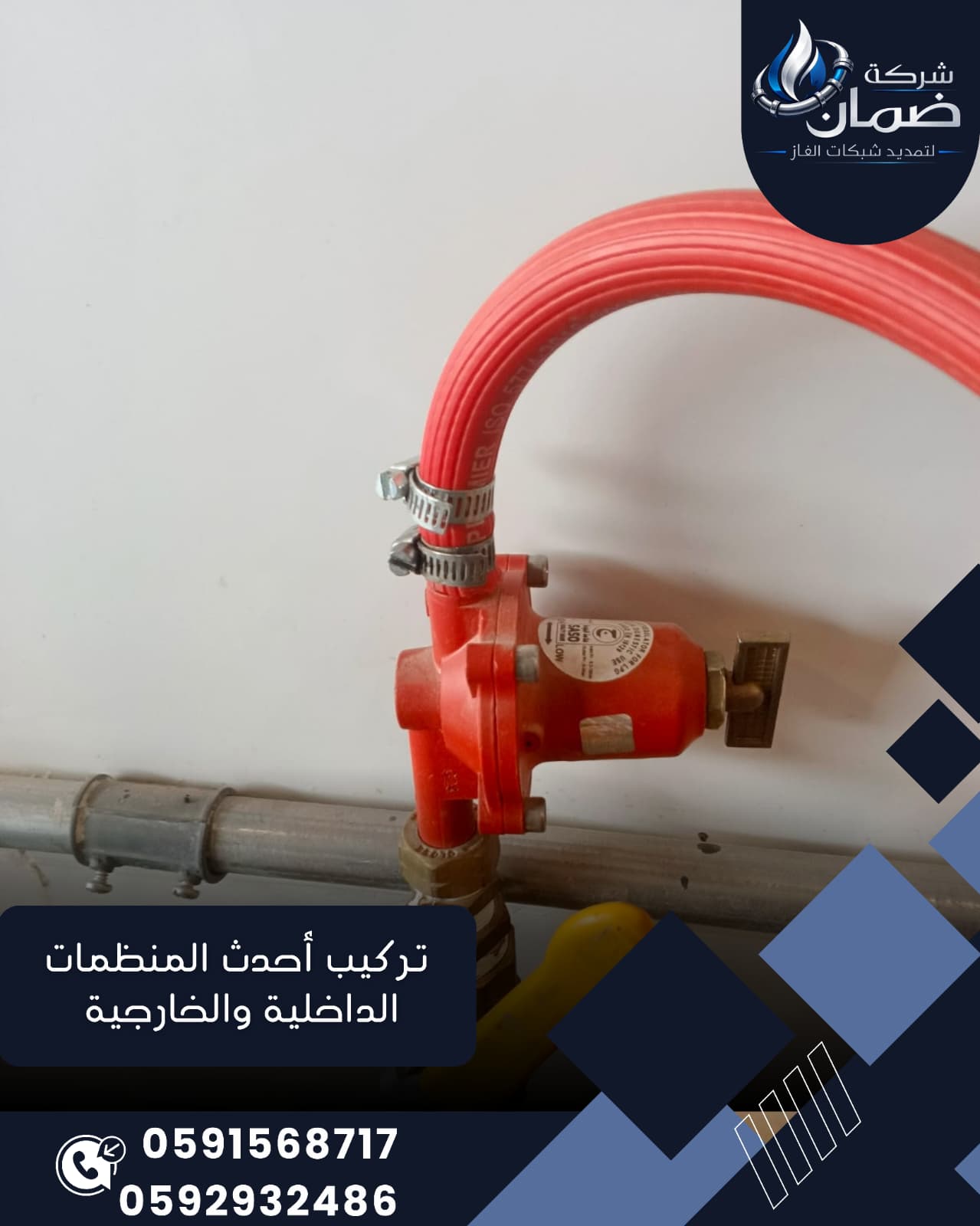
A gas regulator serves as one of the most important components in any gas distribution system because it acts as the primary connection between the gas storage tank and all gas-powered appliances within a home or commercial facility. Even a minor malfunction in its operation can affect the performance of the entire gas network. Although many regulator failures begin with small warning signs that are easy to recognize, ignoring them may eventually lead to more serious problems requiring replacement of system components or causing complete interruption of gas service. Based on extensive practical experience in maintaining gas systems throughout Saudi Arabia, early inspection of gas regulators allows technicians to identify developing issues before they become major failures, significantly reducing unexpected breakdowns while maintaining the highest standards of operational safety. Understanding the first warning signs of regulator deterioration has therefore become an essential part of preventive maintenance for every central gas system.
Signs of a Damaged Gas Regulator
A gas regulator rarely fails suddenly without warning. In most situations, several indicators appear beforehand, signaling that the regulator's internal performance is beginning to deteriorate. Among the most common warning signs are an unstable gas flame, weak burner performance whenever multiple appliances are operating simultaneously, or noticeable fluctuations in flame intensity without any obvious explanation. Users may also experience delayed ignition or flames that extinguish shortly after lighting. These symptoms should never be ignored and should always prompt a professional inspection rather than simple observation.
Based on extensive maintenance experience, many property owners initially assume that the problem lies within their household appliances, while the actual cause is often a gas regulator that can no longer maintain stable operating pressure throughout the system. In some cases, unusual noises or light vibrations may also develop inside the regulator as internal components gradually wear with age and continuous operation.
Changes in overall gas consumption or appliance performance should also receive careful attention because these may indicate pressure regulation problems. Qualified technicians use calibrated pressure-testing equipment to compare actual operating pressure with the system's original design specifications before determining whether repair or replacement is the most appropriate solution.
Real-world maintenance experience consistently demonstrates that identifying these warning signs during the earliest stages prevents major failures, reduces repair expenses, and preserves the long-term safety of the entire gas network.
• Watch for weak or unstable gas flames.
• Pay attention to delayed appliance ignition.
• Never ignore unusual sounds or vibrations.
• Monitor unexpected changes in gas consumption.
• Arrange professional inspection whenever abnormal symptoms appear.
Causes of Low Gas Pressure at Home
Low gas pressure is one of the most common issues affecting residential gas systems, but it does not necessarily mean that the regulator is always responsible. In many situations, reduced pressure results from partial pipeline blockage, minor gas leakage, or increased gas demand after additional appliances have been connected without recalculating system capacity. Professional diagnosis therefore begins by inspecting the complete gas network rather than focusing exclusively on the regulator.
Practical field experience shows that the regulator becomes the direct cause of pressure loss when its internal components wear out or when it can no longer maintain stable gas flow. Likewise, installing a regulator that is too small for the system's actual demand often causes noticeable pressure drops whenever several appliances operate simultaneously, particularly in large villas or commercial kitchens.
External factors such as a nearly empty gas storage tank or contaminants inside the supply pipeline may also contribute to reduced operating pressure. For this reason, experienced technicians examine every possible cause before recommending replacement of any system component. Accurate diagnosis is always based on actual measurements rather than assumptions.
Real project experience consistently confirms that identifying the true source of pressure loss from the beginning eliminates unnecessary repair costs and restores full system performance much more efficiently.
• Inspect the entire gas network before replacing the regulator.
• Verify that the regulator matches the system capacity.
• Measure operating pressure using certified equipment.
• Review gas demand and recently added appliances.
• Solve the actual cause instead of treating the symptoms.
Why Does the Gas Flame Become Weak?
A weak gas flame is one of the most common reasons homeowners request gas system maintenance. However, several different technical issues may produce the same symptom. In some cases, reduced flame strength is caused by insufficient pressure leaving the gas regulator, while in others it may result from blocked burner ports, restrictions inside the gas supply lines, or an insufficient amount of gas remaining in the storage tank. Consequently, determining the actual cause requires a complete inspection of the gas system rather than relying on assumptions.
Extensive experience with gas system maintenance shows that flame weakness caused by the regulator usually affects every connected appliance simultaneously rather than only one individual appliance. Users often notice that burner flames become noticeably weaker whenever several gas appliances operate at the same time, clearly indicating that the regulator is no longer capable of maintaining the required operating pressure.
Professional technicians use precision pressure-testing instruments to evaluate regulator performance under various operating conditions. Additional tests are also performed to verify that no leaks or blockages exist elsewhere within the gas network before recommending either repair or replacement. These systematic procedures prevent unnecessary replacement of functional components while reducing both maintenance costs and repair time.
Practical experience consistently demonstrates that professional diagnosis of weak gas flames addresses the true source of the problem, restores full appliance performance, and eliminates the need for temporary or ineffective solutions.
• Inspect every appliance to determine the nature of the fault.
• Measure gas pressure while appliances are operating.
• Verify the condition of the gas supply pipelines.
• Never replace the regulator before completing a full inspection.
• Depend on specialized gas system maintenance professionals.
Gas Leakage from the Regulator
Gas leakage from a regulator is considered one of the most dangerous faults associated with any gas distribution system because it may begin without being immediately noticeable to the user. In many cases, the leak starts at a very small rate due to worn sealing gaskets, loose fittings, or deterioration of internal regulator components, gradually increasing over time if left unaddressed. For this reason, identifying gas leaks at the earliest possible stage is one of the most important aspects of maintaining a safe gas installation.
Based on extensive experience in maintaining central gas systems, one of the first warning signs of a regulator leak is the smell of gas around the regulator itself or a faint hissing sound that resembles escaping air from a specific connection point. Users may also notice that the gas storage tank empties faster than normal despite no significant increase in consumption, which should immediately prompt suspension of gas usage and a professional inspection.
Qualified technicians rely on specialized electronic gas leak detectors together with approved leak detection solutions to accurately identify the source of leakage without using unsafe or unreliable methods. Once the leak location has been confirmed, the entire regulator is carefully evaluated to determine whether professional repair is appropriate or complete replacement is the safer option.
Real-world maintenance experience consistently demonstrates that responding immediately to even the smallest gas leak protects lives, safeguards property, and prevents minor faults from developing into serious safety hazards affecting the entire gas network.
• Stop using all gas appliances immediately if a leak is suspected.
• Never use open flames or ignition sources near the suspected leak.
• Use professional gas leak detection equipment.
• Inspect the regulator together with every connected fitting.
• Have all repairs carried out by qualified gas specialists.
When Should a Gas Regulator Be Replaced?
Many property owners believe that a gas regulator can remain in service indefinitely. In reality, every regulator has a recommended operational lifespan that depends on operating hours, environmental conditions, equipment quality, and maintenance history. Continuing to use an aging regulator after obvious signs of wear appear may reduce system efficiency while increasing the likelihood of unexpected failures.
Practical experience shows that regulator replacement becomes necessary when gas pressure repeatedly drops, burner flames remain weak despite the rest of the system functioning correctly, visible damage appears on the regulator body, internal components become worn, or environmental exposure such as excessive humidity or physical impact affects overall performance.
Replacement should never be delayed once professional inspection confirms that the regulator is no longer capable of maintaining stable operating pressure. Under these circumstances, repair often becomes only a temporary solution that no longer provides the level of operational safety required for modern gas systems.
Field experience consistently confirms that replacing a gas regulator at the appropriate time costs considerably less than repairing the extensive damage that may result from allowing a worn regulator to remain in operation beyond its intended service life.
• Monitor the regulator throughout its recommended service life.
• Replace the regulator whenever performance begins to decline.
• Avoid relying on temporary repair solutions.
• Install only certified replacement regulators.
• Perform complete system testing after installation.
Central Gas Regulator Maintenance
Routine maintenance of a central gas regulator plays a vital role in maintaining stable gas pressure while identifying developing faults before they become serious operational problems affecting the entire gas network. Professional gas companies therefore implement preventive maintenance programs that include regular regulator inspections even when no obvious faults are present.
Based on practical experience with central gas installations, preventive maintenance includes measuring operating pressure, inspecting internal regulator components, checking for gas leaks, examining fittings and safety devices, and verifying the overall condition of the regulator housing. External regulators also receive additional inspection because continuous exposure to sunlight, dust, humidity, and changing weather conditions may gradually affect their performance.
Preventive maintenance significantly extends regulator service life while reducing the likelihood of sudden failures capable of interrupting gas supply to homes, restaurants, commercial kitchens, or industrial facilities. Regular inspections also allow technicians to identify minor issues before they require expensive corrective repairs.
Practical maintenance experience consistently demonstrates that following a scheduled preventive maintenance program reduces long-term operating costs while preserving the efficiency, reliability, and safety of the complete gas distribution system.
• Perform scheduled preventive maintenance regularly.
• Measure operating pressure periodically.
• Inspect all fittings and safety devices.
• Clean regulator components whenever required.
• Maintain detailed service records after every inspection.
Gas Regulator Repair in Saudi Arabia
Not every gas regulator fault can be repaired because the nature of the problem determines whether repair remains technically appropriate or complete replacement becomes necessary. Some failures involve relatively minor issues such as replacing sealing components or recalibrating operating pressure, while more severe problems require complete replacement because of internal wear or permanent loss of pressure regulation accuracy.
Based on practical maintenance experience, every repair begins with a comprehensive technical diagnosis using pressure-testing equipment and gas leak detection instruments. Only after identifying the actual source of the problem do qualified technicians determine the appropriate repair procedure. This systematic approach prevents unnecessary replacement of functioning components while reducing maintenance costs for the customer.
Whenever repair is technically feasible, only certified replacement parts that comply with approved specifications should be installed. After completing repairs, technicians perform complete pressure testing and operational verification to ensure that the regulator once again maintains the design operating pressure throughout the gas network.
Real-world field experience consistently confirms that professional repairs successfully restore regulator performance when faults remain limited. However, complete replacement remains the safest solution whenever inspection determines that the regulator has reached the end of its operational life.
• Diagnose the fault before beginning repairs.
• Use certified pressure-testing equipment.
• Install only genuine approved replacement parts.
• Test regulator performance after maintenance.
• Follow all applicable gas safety procedures throughout the repair process.
Gas Pressure Problems in Kitchens
Gas pressure problems in residential and commercial kitchens may appear in several different ways. Users often notice that food takes longer to cook, ovens fail to reach their normal temperatures, or burner flames become weaker whenever more than one appliance operates simultaneously. Although these symptoms may initially seem minor, they often indicate an underlying problem somewhere within the gas distribution system, with the gas regulator being one of the primary components to investigate whenever all appliances experience the same issue at the same time.
Based on extensive experience inspecting kitchen gas systems, reduced gas pressure may result from a regulator that is undersized for the actual gas demand, deterioration of internal regulator components, pressure loss caused by long pipeline runs, or improperly sized gas pipes. In addition, connecting new gas appliances without recalculating the overall system load frequently causes gradual pressure reduction as total gas demand exceeds the regulator's design capacity.
Professional technicians measure gas pressure at several locations throughout the distribution system rather than testing only the regulator itself. This allows them to identify precisely where pressure loss occurs. They also evaluate system performance while multiple appliances operate simultaneously because certain faults only become apparent during periods of maximum gas consumption.
Real-world engineering experience consistently demonstrates that properly diagnosing gas pressure problems allows technicians to correct the true source of the fault while avoiding unnecessary repairs or replacement of components that continue to function correctly.
• Measure gas pressure at multiple points throughout the network.
• Test system performance under full operating load.
• Verify that the regulator matches the actual gas demand.
• Inspect pipeline sizing and gas supply lines carefully.
• Correct the root cause rather than treating only the visible symptoms.
Inspecting a Gas Regulator Before Failure
The most effective way to prevent unexpected regulator failures is to identify developing problems before they become operational faults. Routine inspection of gas regulators therefore represents one of the most valuable preventive maintenance practices available. Many regulator problems begin with subtle performance changes that are difficult for property owners to recognize but can easily be detected by experienced technicians using professional diagnostic equipment.
Based on preventive maintenance experience, a complete regulator inspection includes measuring both inlet and outlet gas pressure, verifying pressure stability during operation, examining the regulator housing and all connected fittings, checking for any evidence of gas leakage, and comparing the regulator's service life against the manufacturer's recommended replacement interval.
Technicians also evaluate whether the regulator remains suitable for the property's current gas demand, especially if additional appliances have been installed or the facility has been expanded since the previous inspection. This engineering review helps identify capacity limitations before they develop into operational problems affecting the entire gas system.
Practical maintenance experience consistently demonstrates that scheduled preventive inspections dramatically reduce emergency breakdowns, maintain stable gas pressure, and provide property owners with greater confidence in both the safety and reliability of their gas systems.
• Schedule inspections even when no faults are visible.
• Measure operating pressure accurately.
• Verify fitting integrity and confirm that no gas leaks exist.
• Monitor the regulator's operational service life.
• Reassess system capacity whenever gas demand increases.
Gas Regulator Maintenance Company
Choosing a specialized gas regulator maintenance company is just as important as selecting the regulator itself because accurate diagnosis and professional expertise directly affect both system safety and repair quality. Experienced gas engineering companies never replace components randomly. Instead, they begin with a complete engineering inspection to identify the true source of the problem before recommending any corrective action.
Guarantee Gas Company specializes in the installation and maintenance of central gas systems throughout Saudi Arabia. Its engineering teams possess extensive experience diagnosing gas regulator failures, measuring operating pressure, detecting gas leaks, and evaluating complete gas networks according to recognized engineering standards. The company utilizes modern testing equipment together with certified replacement components to ensure that every maintenance project meets the highest quality and safety requirements.
The company's services extend beyond repairing existing faults. Preventive maintenance programs are also provided to help customers detect developing problems before they become major failures. This proactive approach significantly reduces unexpected breakdowns while extending the operational lifespan of the complete gas distribution system.
Practical field experience consistently confirms that relying on a specialized engineering company as soon as abnormal symptoms appear prevents faults from escalating while ensuring that every maintenance procedure is performed safely and professionally to preserve both system efficiency and user safety.
• Diagnose faults using professional testing equipment.
• Perform maintenance according to engineering standards.
• Install only certified replacement components.
• Provide scheduled preventive maintenance programs.
• Deliver technical solutions suitable for every type of facility.
Why Is Guarantee Gas the Best Gas Installation Company in Saudi Arabia?
The quality of a gas installation project depends on far more than simply purchasing reliable equipment. Engineering expertise, accurate system design, proper component selection, professional installation, comprehensive testing, and long-term maintenance all contribute directly to the overall safety and performance of the gas network. This is why Guarantee Gas Company has earned a strong reputation for successfully delivering central gas projects for homes, villas, restaurants, commercial facilities, and industrial operations throughout Saudi Arabia.
Every project begins with a comprehensive site inspection followed by detailed engineering calculations to determine gas demand and identify the most appropriate regulators, pipelines, safety devices, and system components. Installation is then carried out by highly qualified technicians, while extensive pressure testing and leak detection are completed before the gas system is placed into operation, ensuring maximum reliability and operational safety.
In addition to installation services, the company provides scheduled maintenance, rapid emergency response, and technical consultation for upgrading existing gas systems whenever operational requirements change. Customers therefore receive continuous engineering support throughout the entire lifecycle of their gas distribution systems.
Years of practical experience, strict compliance with Saudi engineering standards, and the exclusive use of certified gas equipment have established Guarantee Gas as one of the preferred choices for customers seeking safe, reliable, and professionally engineered gas installations across the Kingdom.
• Professional engineering design for every project.
• Installation and maintenance performed according to Saudi standards.
• Comprehensive pressure and leak testing before commissioning.
• Ongoing preventive maintenance programs.
• Long-term technical support and after-sales service.
Conclusion
Most gas regulator failures begin with minor warning signs that can easily be detected through regular inspection, including weak burner flames, unstable gas pressure, or unusual gas odors. Although these symptoms may initially appear insignificant, ignoring them can eventually lead to major equipment failures, higher repair costs, and safety risks affecting both people and property. Implementing preventive inspections and relying on experienced specialists such as Guarantee Gas Company ensures that developing faults are identified before they become serious problems, maintains stable gas pressure throughout the network, and significantly extends the service life of every component within the gas distribution system.
Frequently Asked Questions
What is the first sign that a gas regulator is failing?
The most common early warning signs include weak or unstable gas flames, delayed appliance ignition, and noticeable fluctuations in gas pressure during operation.
Does a weak gas flame always mean the regulator is faulty?
No. Weak flames may also result from blocked burner ports, low gas levels in the storage tank, or restrictions within the gas supply lines. A complete professional inspection is necessary before identifying the actual cause.
When should a gas regulator be replaced?
A regulator should be replaced once it reaches the end of its service life or when professional inspection confirms that it can no longer maintain stable operating pressure or has developed internal damage that cannot be repaired safely.
Can a gas regulator be repaired?
That depends on the specific fault. Minor problems may be repairable, while severe internal wear or permanent damage usually requires complete regulator replacement.
How is gas leakage from a regulator detected?
Professional technicians use certified electronic gas leak detection equipment together with approved inspection methods rather than relying on unsafe or inaccurate techniques.
How often should a gas regulator be inspected?
Regular preventive inspections are recommended according to the maintenance schedule or immediately whenever any abnormal change in gas system performance is observed.
Why should I choose Guarantee Gas Company?
Guarantee Gas provides professional engineering diagnosis, expert maintenance, certified equipment, comprehensive installation services, and complete testing in accordance with the highest safety standards applied throughout Saudi Arabia.