
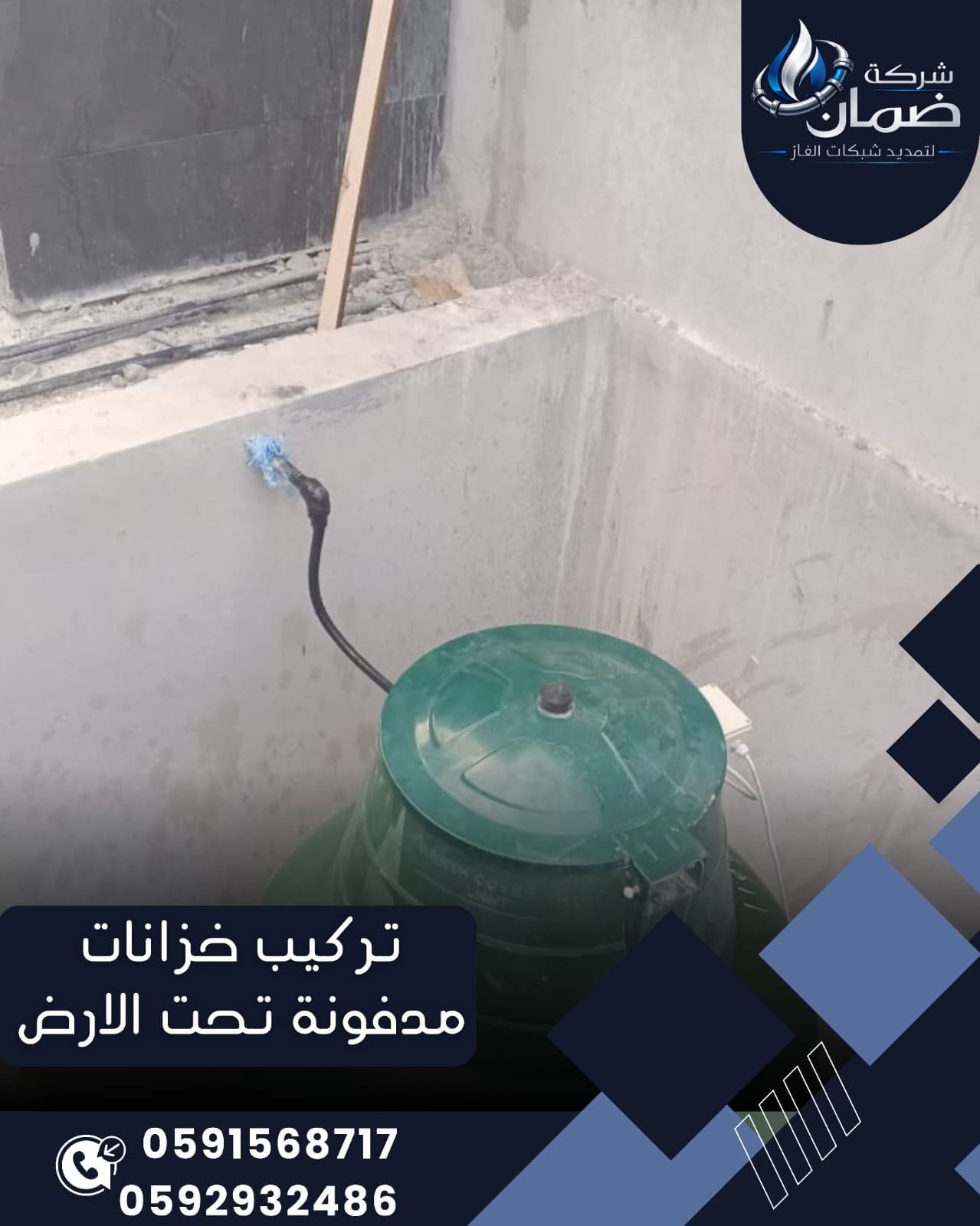
Underground gas tanks represent one of the most advanced and reliable gas storage solutions available today, particularly for villas, luxury residences, residential compounds, restaurants, and commercial facilities that require an attractive exterior appearance without compromising operational efficiency or safety standards. Unlike above-ground gas tanks, underground systems differ significantly in installation methods, engineering requirements, maintenance procedures, and protective systems. However, when professionally designed and installed, they provide exceptional long-term performance and numerous operational advantages. Based on extensive practical experience in designing and constructing gas distribution systems throughout Saudi Arabia, the success of any underground gas tank project begins with a comprehensive engineering site assessment, followed by careful tank selection, professionally executed excavation, proper corrosion protection, and installation according to the highest engineering and safety standards to ensure reliable, efficient, and safe operation for many years.
Underground Gas Tank Installation
Installing an underground gas tank is a comprehensive engineering project that involves much more than excavating a hole and lowering the tank into the ground. The process begins with detailed geological and engineering studies that evaluate soil conditions, groundwater levels, underground utility locations, and the safest installation area capable of satisfying every engineering and safety requirement. Engineers also calculate surrounding structural loads while verifying mandatory safety clearances from buildings, roads, utilities, and neighboring structures before approving the final installation design.
Based on extensive practical experience, the excavation is prepared according to carefully calculated engineering dimensions that match the size and operating requirements of the selected tank. A reinforced concrete foundation or specially engineered support base is then constructed depending on project specifications. Secure anchoring systems are installed to prevent tank movement or flotation caused by soil settlement or groundwater pressure. In addition, advanced external protective coatings and corrosion-resistant insulation systems are applied to preserve the structural integrity of the tank throughout its operational life.
Once the tank has been securely positioned, engineers proceed with installing the gas distribution network, pressure regulators, safety valves, inspection chambers, and cathodic protection systems whenever required. Comprehensive pressure testing and electronic leak detection are then completed before the excavation is backfilled using engineered fill materials that maintain long-term stability while protecting the tank against future soil movement.
Real-world engineering experience consistently demonstrates that strict adherence to every stage of professional underground tank installation significantly extends service life, minimizes operational failures, and provides the highest possible level of safety for residential and commercial gas systems.
• Conduct a complete engineering assessment before installation begins.
• Prepare the excavation and foundation according to engineering specifications.
• Install certified anchoring and corrosion protection systems.
• Complete pressure and leak testing before backfilling.
• Fully document every engineering stage of the project.
Underground Gas Tank Cost
The cost of an underground gas tank depends upon numerous engineering and technical factors, making it impossible to establish one standard price suitable for every installation. Project costs are influenced by storage capacity, manufacturing specifications, corrosion protection systems, soil conditions, excavation depth, waterproofing requirements, gas distribution components, pressure regulation equipment, and the engineering inspections and commissioning procedures required before the system enters service.
Based on extensive practical experience, the overall project cost includes far more than the gas tank itself. Excavation, site preparation, engineered backfilling, inspection chambers, pressure regulators, safety valves, corrosion protection systems, pressure testing, and commissioning all represent essential engineering components that must be included within the total project budget to ensure a safe and reliable installation.
Selecting a lower-quality underground gas tank solely because of its lower purchase price often results in increased maintenance expenses, premature replacement, and reduced operational reliability. In contrast, certified tanks manufactured according to approved engineering standards provide substantially longer service life, greater operational stability, and lower long-term maintenance costs, making them the better investment over time.
Practical engineering experience consistently confirms that project comparisons should always focus on the complete engineering value of the installation rather than comparing gas tank prices alone.
• Total cost varies according to tank capacity and engineering requirements.
• Project costs include excavation and professional installation.
• Never choose a tank based solely on purchase price.
• Compare complete engineering solutions rather than individual components.
• Invest in certified tanks designed for long-term service.
Underground Gas Tank Installation Company
Choosing a specialized underground gas tank installation company is one of the most important decisions affecting the overall success of the project because underground installations require advanced engineering expertise in system design, excavation, corrosion protection, structural support, and commissioning procedures. General gas installation experience alone is not sufficient for projects involving underground gas storage systems. Successful implementation requires an engineering team possessing specialized knowledge of underground installation standards and protective technologies.
Based on extensive practical experience, professional engineering companies begin every project by conducting a comprehensive site assessment before designing the installation according to soil conditions, project requirements, and operational demand. The most suitable gas tank is then selected while every stage of construction is completed using modern equipment and engineering techniques that protect the tank throughout installation and long-term operation.
Professional companies also supervise pressure testing, electronic leak detection, complete inspection of every gas system component, and preparation of the technical documentation required for regulatory approval. Following project completion, they provide preventive maintenance programs and scheduled inspections that ensure reliable performance throughout the operational life of the installation.
Real-world engineering experience consistently demonstrates that engaging a specialized underground gas installation company from the beginning significantly reduces construction errors, improves installation quality, and delivers safer, more reliable gas distribution systems.
• Perform every project through qualified engineering specialists.
• Design each installation according to site-specific conditions.
• Utilize advanced installation equipment and engineering methods.
• Complete all required testing before commissioning.
• Provide ongoing maintenance and inspection programs.
Best Gas Tank for Villas
When designing a gas distribution system for a residential villa, the objective extends far beyond simply providing a continuous fuel supply. The goal is to create a fully integrated gas system that delivers the highest standards of safety, operational efficiency, and long-term reliability while preserving the property's architectural appearance. For this reason, underground gas tanks are widely regarded as one of the best solutions for villas because they maximize usable outdoor space, maintain an attractive landscape, and provide additional protection from environmental exposure. Nevertheless, selecting the best gas tank for a villa depends on far more than storage capacity alone. Engineers must evaluate expected gas consumption, the number of connected appliances, available land area, and future expansion plans before recommending the most suitable underground storage solution.
Based on extensive practical experience in residential gas installations, engineers determine the appropriate underground tank by carefully calculating the thermal load generated by kitchens, water heaters, space heating systems, and any future gas-powered equipment that may be added later. The selected tank should comply fully with approved engineering standards while incorporating corrosion-resistant coatings, certified safety valves, and pressure regulation equipment specifically designed to match the requirements of the complete gas distribution network.
Professional engineering practice also recommends selecting underground tanks that simplify future maintenance by incorporating properly designed inspection chambers that allow technicians to access valves, regulators, and safety equipment without requiring additional excavation. This engineering approach reduces long-term maintenance expenses while significantly improving operational reliability throughout the service life of the installation.
Real-world engineering experience consistently demonstrates that selecting the correct underground gas tank at the beginning of the project ensures stable gas supply, minimizes operational failures, and delivers safe, dependable performance for many years.
• Select tank capacity according to the villa's actual gas consumption.
• Install certified tanks equipped with complete corrosion protection systems.
• Consider future expansion during engineering design.
• Ensure convenient maintenance access through properly designed inspection chambers.
• Complete a comprehensive engineering study before selecting the tank.
Underground Gas Tank Requirements
Underground gas tanks are subject to a comprehensive set of engineering requirements intended to guarantee safe operation throughout their entire service life. These requirements include selecting an appropriate installation location away from excessive structural loads and underground utilities, excavating according to approved engineering dimensions, installing corrosion protection systems, and maintaining mandatory safety clearances between the tank, buildings, roads, and surrounding infrastructure.
Based on extensive practical experience, complying with these engineering requirements from the earliest planning stages prevents many future operational problems such as soil settlement, deterioration of protective coatings, restricted maintenance access, and unnecessary excavation during future inspections. Engineers also ensure that inspection chambers are properly positioned to provide convenient access to valves and pressure regulators while maintaining complete protection for the underground storage system.
The engineering requirements further include pressure testing, electronic leak detection, inspection of cathodic protection systems, and complete verification of every safety component before commissioning the installation. All testing procedures are carefully documented within the project's engineering records to verify full compliance with Saudi technical regulations and approved engineering standards.
Practical engineering experience consistently demonstrates that strict compliance with every underground installation requirement substantially improves operational safety, extends service life, and minimizes future maintenance costs throughout the life of the gas storage system.
• Select an installation site that satisfies every engineering safety requirement.
• Perform excavation according to approved engineering dimensions.
• Install certified corrosion protection systems.
• Complete every engineering inspection before commissioning.
• Document all construction and testing procedures.
Underground Gas Tank Construction
Constructing underground gas storage systems requires precise coordination between civil engineering, mechanical engineering, gas distribution, corrosion protection, and safety systems because the project combines excavation, reinforced concrete construction, protective coatings, gas piping, and safety equipment into one integrated engineering installation. Every project therefore begins with detailed engineering drawings specifying the tank location, inspection chambers, underground piping routes, drainage systems, and protective equipment.
Based on extensive practical experience, excavation is carried out using equipment appropriate for the site's geological conditions before preparing the engineered foundation and carefully lowering the tank into position using procedures that prevent structural stress or mechanical damage. Once securely installed, engineers complete all gas connections, install pressure regulators, safety valves, and protective systems, then perform comprehensive engineering tests before backfilling the excavation with approved materials that preserve structural stability and protect external corrosion-resistant coatings.
Following completion of construction, the entire gas distribution system undergoes full operational commissioning under realistic working conditions. Engineers monitor gas pressure, verify stable gas flow, confirm correct operation of every safety device, and ensure that all protective systems function according to engineering specifications. After successful commissioning, the owner receives complete technical documentation including inspection records, test results, maintenance procedures, and engineering drawings for future reference.
Real-world engineering experience consistently confirms that professionally executed underground gas tank construction performed according to comprehensive engineering plans provides exceptional long-term quality, safety, and operational reliability.
• Prepare complete engineering drawings before construction begins.
• Use specialized equipment during excavation and installation.
• Complete all engineering tests before final backfilling.
• Perform full operational commissioning before project handover.
• Deliver comprehensive engineering documentation upon completion.
Underground Gas Tank Maintenance
Although underground gas tanks are naturally protected from direct weather exposure, they still require structured preventive maintenance programs to preserve operational efficiency and ensure long-term safety. Maintenance activities include inspecting inspection chambers, testing safety valves and pressure regulators, verifying cathodic protection performance, monitoring operating pressure, and performing electronic leak detection whenever necessary.
Based on extensive engineering experience, preventive maintenance is carried out according to scheduled inspection intervals determined by the tank's age, operating conditions, and gas consumption. Every inspection result is documented within detailed engineering reports that allow specialists to monitor the condition of the installation while planning future maintenance before operational problems develop.
Maintenance procedures also include evaluating corrosion protection systems, inspecting underground gas connections, verifying safety equipment performance, and ensuring that every component continues operating according to the original engineering design. This preventive engineering approach minimizes unexpected failures while extending the service life of the underground storage installation.
Real-world engineering projects consistently demonstrate that routine preventive maintenance represents one of the most effective methods for preserving the long-term safety, efficiency, and reliability of underground gas storage systems.
• Perform scheduled preventive inspections.
• Test operating pressure and safety equipment regularly.
• Verify cathodic protection system performance.
• Inspect all underground gas connections.
• Maintain detailed engineering maintenance records.
Underground Gas Tank Inspection
Inspecting underground gas tanks is one of the most important preventive engineering procedures for maintaining the long-term safety, reliability, and operational efficiency of an underground gas distribution system. Although the storage tank is buried below ground and protected from many environmental factors, this does not eliminate the need for routine inspections. On the contrary, underground tanks require structured inspection programs that rely on specialized engineering equipment and diagnostic testing capable of identifying hidden changes that could affect structural integrity or system performance long before they develop into significant operational problems.
Based on extensive practical experience, inspection procedures begin with a detailed examination of inspection chambers, safety valves, pressure regulators, and all accessible protective equipment. Engineers then verify operating pressure, inspect every accessible connection, and perform advanced electronic leak detection throughout the gas distribution system. The cathodic protection system is carefully tested to confirm that it continues protecting the tank against corrosion caused by soil conditions and groundwater. Whenever necessary, engineers also evaluate the condition of the external protective coatings to ensure long-term corrosion resistance.
Comprehensive inspections extend beyond technical measurements alone. Engineers also review previous maintenance records and compare current inspection results with historical performance data to identify gradual changes that may indicate the need for preventive maintenance before failures occur. This engineering approach significantly reduces repair costs while preventing unexpected interruptions to gas service.
Real-world engineering experience consistently demonstrates that implementing scheduled underground gas tank inspection programs is one of the most effective methods of preserving system safety, extending service life, and maintaining reliable long-term operation.
• Perform scheduled inspections using certified engineering equipment.
• Test operating pressure at regular maintenance intervals.
• Verify the performance of the cathodic protection system.
• Inspect every valve and gas connection carefully.
• Document every inspection within detailed engineering reports.
Selecting the Correct Underground Tank Capacity
Determining the correct underground gas tank capacity is one of the most important engineering decisions influencing the efficiency, operating cost, and long-term reliability of any gas storage system. Tank capacity should never be selected according to building size alone. Instead, engineers perform detailed calculations based on actual gas consumption, the number of connected appliances, daily operating hours, anticipated peak demand, and future expansion plans.
Based on extensive engineering experience, specialists calculate the total thermal demand generated by every gas-powered appliance within the property before determining the storage capacity required to maintain uninterrupted gas supply without excessive refilling or unnecessary oversizing. Engineers also include an operational reserve that allows additional gas equipment to be installed in the future without requiring complete replacement of the underground storage tank.
This engineering methodology improves operating efficiency, reduces fuel delivery frequency, lowers long-term operating expenses, and ensures continuous gas availability during periods of maximum demand. At the same time, it prevents unnecessary investment in oversized storage systems that provide little additional operational benefit.
Practical engineering experience consistently demonstrates that selecting the correct underground gas tank capacity through detailed engineering analysis creates a stable, efficient, and highly reliable gas supply system capable of supporting long-term operational requirements.
• Calculate capacity according to actual gas consumption.
• Evaluate both current and future operational demand.
• Reduce unnecessary gas delivery frequency.
• Include reserve capacity for future expansion.
• Base every decision on professional engineering calculations.
Underground Gas Tank Contractor in Saudi Arabia
Selecting a qualified underground gas tank contractor is one of the most critical factors determining the success of the entire project because underground gas installations require advanced expertise in engineering design, excavation, structural construction, corrosion protection, pressure testing, and system commissioning. The contractor's responsibilities extend far beyond excavation and installation. Professional contractors begin every project with a comprehensive engineering assessment before supervising every stage of construction according to approved Saudi engineering standards.
Based on extensive practical experience, professional contractors employ experienced engineers and certified technicians to perform excavation, foundation construction, underground tank installation, gas piping, corrosion protection systems, pressure testing, electronic leak detection, and operational commissioning before placing the installation into service. They also prepare complete engineering documentation confirming compliance with applicable Saudi regulations and technical standards.
Professional underground gas contractors continue supporting clients through scheduled preventive maintenance, routine inspections, engineering consultations, and technical assistance whenever system expansion or modernization becomes necessary. These long-term engineering services ensure continued operational reliability while maintaining the highest possible safety standards throughout the life of the installation.
Real-world engineering projects consistently demonstrate that selecting an experienced underground gas contractor significantly reduces construction errors, improves installation quality, and delivers safer, more reliable underground gas systems.
• Complete every project using qualified engineering specialists.
• Maintain full compliance with Saudi engineering regulations.
• Perform comprehensive testing before project handover.
• Provide scheduled preventive maintenance programs.
• Deliver engineering solutions customized to every project.
Why Is Guarantee Gas the Best Gas Installation Company in Saudi Arabia?
Guarantee Gas Company is one of Saudi Arabia's leading engineering specialists in the design, installation, and maintenance of underground gas storage systems. Every project begins with a detailed engineering study that evaluates site conditions, analyzes soil characteristics, determines the appropriate storage capacity, and designs the complete gas distribution system according to the highest Saudi engineering and safety standards. Modern installation equipment and certified engineering materials are used throughout every phase of construction to ensure maximum reliability and long-term operational safety.
The company's engineering team includes highly qualified engineers and certified technicians who supervise excavation, foundation construction, underground tank installation, corrosion protection systems, gas piping, pressure regulators, safety equipment, electronic leak detection, pressure testing, and final commissioning before project completion. Every stage of construction is fully documented through comprehensive engineering reports verifying compliance with Saudi technical specifications.
Guarantee Gas provides much more than installation services alone. The company also delivers preventive maintenance programs, scheduled underground tank inspections, continuous technical support, engineering consultations, and assistance with future system expansion, ensuring that every underground gas installation continues operating safely and efficiently for many years.
Through extensive engineering experience, exceptional workmanship, strict regulatory compliance, and long-term customer support, Guarantee Gas has established itself as one of the most trusted companies for underground gas storage projects throughout Saudi Arabia.
• Perform comprehensive engineering studies before construction begins.
• Complete professional installation according to the highest safety standards.
• Use only certified underground tanks and engineering equipment.
• Perform pressure testing, leak detection, and commissioning before handover.
• Provide continuous maintenance programs and technical support.
Conclusion
Underground gas tanks represent an outstanding solution for villas, residential developments, and commercial facilities seeking the highest standards of operational safety while preserving the property's architectural appearance. However, achieving these advantages depends entirely upon professional engineering design, accurate installation, strict compliance with safety requirements, and continuous preventive maintenance after commissioning. By partnering with Guarantee Gas Company, clients receive a complete engineering solution that begins with detailed planning and concludes with a fully certified underground gas storage system delivering safe, reliable, and efficient operation for many years while maintaining complete compliance with Saudi engineering standards.
Frequently Asked Questions
When should I choose an underground gas tank?
Underground gas tanks are ideal when maintaining the property's appearance is important or when large storage capacity and maximum protection are required.
Is an underground gas tank safer than an above-ground tank?
When professionally designed, installed, inspected, and maintained according to engineering standards, underground gas tanks provide exceptionally high levels of safety and operational reliability.
How is the correct underground gas tank capacity determined?
Engineers calculate capacity according to gas consumption, appliance demand, operating hours, and anticipated future expansion through a comprehensive engineering assessment.
Do underground gas tanks require routine maintenance?
Yes. Regular maintenance includes inspection of protective systems, pressure regulators, safety valves, operating pressure, and electronic leak detection.
What does an underground gas tank inspection include?
Inspections include pressure testing, safety device evaluation, cathodic protection testing, electronic leak detection, and a comprehensive engineering assessment of the entire installation.
Can an underground gas tank be installed without a specialized engineering company?
No. Underground gas storage projects require specialized engineering expertise in design, excavation, corrosion protection, structural construction, and commissioning to ensure safe long-term operation.
Why should I choose Guarantee Gas Company?
Guarantee Gas provides complete engineering design, professional installation, certified testing, scheduled preventive maintenance, and continuous technical support while maintaining full compliance with Saudi engineering standards, ensuring maximum safety, reliability, and long-term operational performance.