
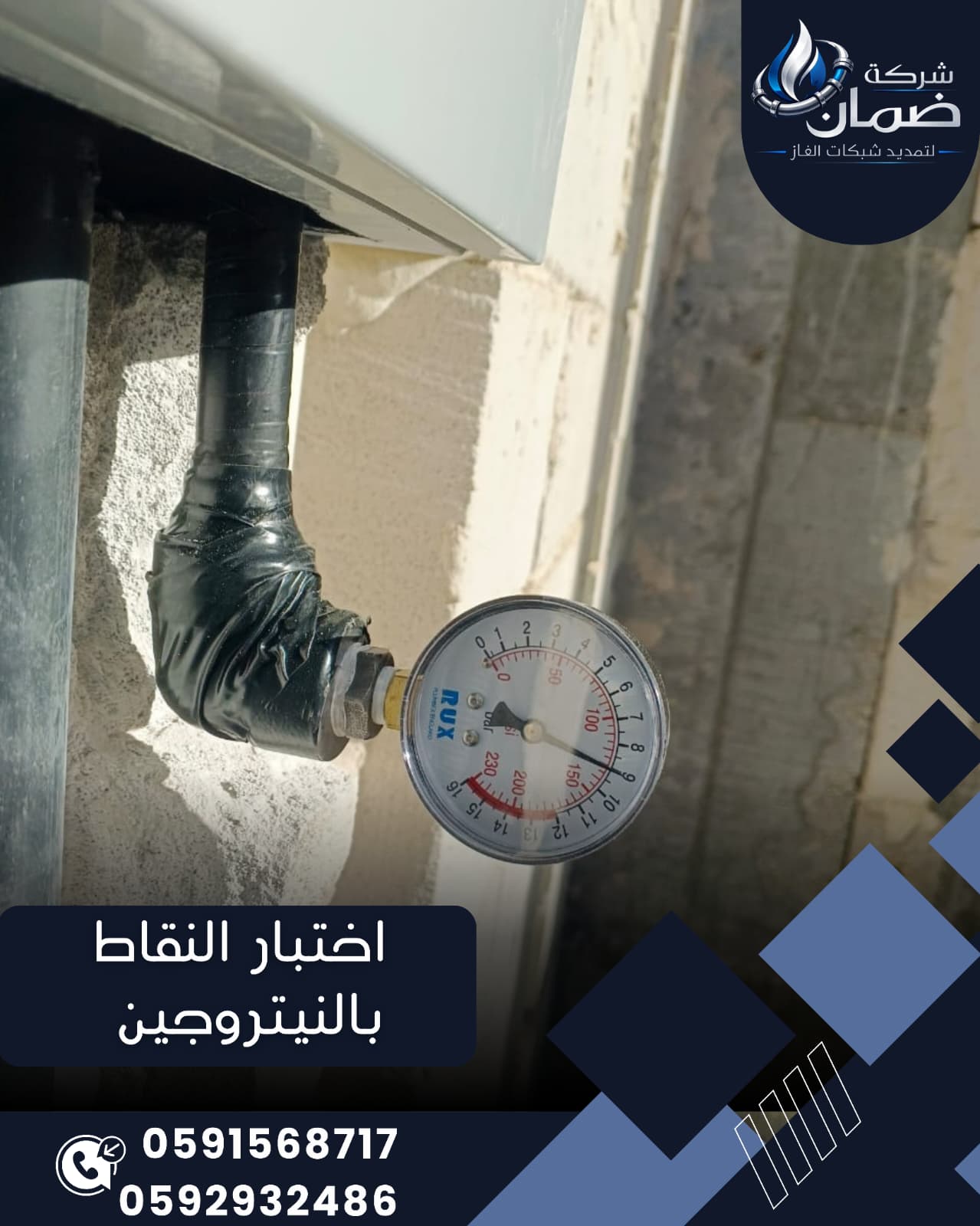
Nitrogen testing is one of the most important engineering procedures performed before commissioning any newly installed gas distribution system, whether it serves a residential home, villa, restaurant, factory, commercial building, or industrial facility. Many project owners mistakenly assume that completing the installation means the gas network is immediately ready for operation. However, engineering practice clearly confirms that no gas distribution system should ever be placed into service until it has successfully passed pressure and leak tests using nitrogen in accordance with approved technical standards. Based on extensive practical experience in designing, installing, and commissioning gas systems throughout Saudi Arabia, nitrogen testing does much more than simply identify leaks. It verifies the structural integrity of every pipe, fitting, valve, and connection before introducing combustible gas into the network, significantly reducing operational risks, protecting lives and property, and ensuring that the entire gas system performs safely and efficiently from its very first day of operation.
Nitrogen Testing for Gas Networks
Nitrogen testing represents the final and most critical engineering stage before commissioning any gas distribution network because it determines whether the entire system is truly ready for safe operation. Nitrogen gas is used during this procedure because it is completely inert, non-flammable, and chemically stable, making it the safest medium available for evaluating the pressure resistance of pipelines, fittings, valves, and mechanical connections without exposing the project site to the hazards associated with combustible gases.
Based on extensive engineering experience, nitrogen testing begins only after every installation activity has been fully completed. All connected appliances are first isolated from the network before nitrogen gas is gradually introduced into the piping system until the specified engineering test pressure is reached. The pressure is then maintained for a predetermined testing period while engineers continuously monitor precision pressure gauges and inspect every section of the network to verify that no pressure loss occurs and no leakage is detected anywhere within the installation.
The procedure involves considerably more than pressure monitoring alone. Engineers also evaluate the performance of shut-off valves, pressure regulators, welded joints, threaded fittings, and mechanical connections while confirming that the entire gas network is capable of withstanding operating conditions before combustible gas is introduced into the system. This process allows hidden installation defects that may not have been visible during construction to be identified before commissioning.
Real-world engineering experience consistently demonstrates that performing nitrogen pressure testing according to approved engineering procedures prevents numerous future operational problems while ensuring the highest standards of safety, reliability, and long-term performance for every gas distribution system.
• Use inert nitrogen gas to perform safe pressure testing.
• Test every component of the gas distribution network before commissioning.
• Monitor pressure using precision calibrated instruments.
• Inspect every fitting, valve, and mechanical connection.
• Document all testing results before approving the installation.
Gas Network Pressure Testing
Gas network pressure testing forms an essential part of approving every newly installed gas distribution system because it verifies that every pipe, fitting, and connection can safely withstand operating pressure without leakage or abnormal pressure loss. Test pressure differs from normal operating pressure because engineers establish a higher specified value according to project specifications in order to provide an additional engineering safety margin before the gas system enters service.
Based on extensive practical experience, engineers gradually increase nitrogen pressure until the predetermined engineering test pressure is reached. That pressure is then maintained for a specified period while highly accurate calibrated instruments continuously monitor every change. Any unexpected pressure variation may indicate leakage or another installation defect requiring immediate investigation before the project proceeds further.
Engineers never rely exclusively on pressure gauge readings. Throughout the testing period they perform comprehensive physical inspections of every valve, connection, fitting, and pipeline while continuously reviewing measurement data. Any unexplained pressure reduction immediately requires suspension of commissioning activities until the cause has been identified, corrected, and successfully retested.
Real-world engineering experience consistently confirms that pressure testing provides the most reliable verification of gas network safety before commissioning while preventing operational failures after the system enters service.
• Establish test pressure according to approved engineering specifications.
• Use calibrated pressure measurement equipment.
• Continuously monitor pressure throughout the testing period.
• Physically inspect every connection during testing.
• Never commission a gas network before successful pressure testing.
Inspecting Gas Piping Before Commissioning
Completing installation work alone does not mean a gas distribution network is ready for operation because comprehensive inspection of every pipeline and system component represents a mandatory engineering requirement before commissioning. These inspections verify that pipeline routing, installation quality, valve locations, pressure regulators, protective equipment, and all safety devices fully comply with the approved engineering design while ensuring every material used satisfies project specifications.
Based on extensive engineering experience, visual inspections are performed first before engineers proceed with nitrogen testing, pressure testing, and comprehensive examination of every welded joint, threaded fitting, mechanical connection, and pipeline support. Engineers carefully inspect every section of piping for deformation, damage, cracks, or installation defects that could negatively affect future operational safety or long-term system reliability.
Inspection procedures also include verifying the correct operation of every shut-off valve, confirming proper installation of pressure regulators and safety equipment, and comparing the completed installation against approved engineering drawings to ensure complete compliance with the original design. This detailed engineering review ensures reliable operation without unexpected failures following system commissioning.
Real-world engineering projects consistently demonstrate that comprehensive inspection before commissioning represents one of the most valuable stages of any gas installation because it provides owners with complete confidence that their gas network has been professionally constructed and is fully prepared for safe operation.
• Inspect every gas pipeline route throughout the installation.
• Examine every welded and mechanical connection.
• Verify the correct installation of all safety equipment.
• Confirm compliance with approved engineering drawings.
• Approve the gas system only after every inspection has been successfully completed.
Nitrogen Leak Testing for Gas Systems
Nitrogen leak testing is one of the most accurate engineering procedures performed before commissioning any gas distribution network because it enables engineers to detect even the smallest leaks without introducing combustible gas into the system. The procedure involves filling the entire pipeline network with nitrogen gas at a specified test pressure, then carefully monitoring pressure stability while inspecting every connection, valve, fitting, and joint using specialized leak detection equipment. Nitrogen is selected because it is an inert gas that does not burn or react with any component of the gas distribution system, making it the safest medium available for pressure and leak testing in residential, commercial, and industrial projects.
Based on extensive engineering experience, specialists never rely solely on pressure gauge readings during nitrogen leak testing. Every threaded connection, welded joint, appliance outlet, shut-off valve, and branch connection is carefully inspected using highly sensitive electronic leak detection instruments. If any pressure drop is observed or a leak is detected anywhere within the system, the testing process is immediately suspended. The defect is repaired, and the entire nitrogen testing procedure is repeated from the beginning until every engineering requirement has been successfully satisfied.
Nitrogen leak testing also serves as a valuable quality control procedure because certain installation defects may remain hidden during construction but become evident only after the gas network is subjected to engineering test pressure. Consequently, leak testing represents a mandatory stage in approving every newly installed gas distribution system.
Real-world engineering experience consistently demonstrates that nitrogen leak testing performed before commissioning dramatically reduces future operational failures, protects lives and property, and ensures that every gas network begins service according to the highest engineering safety standards.
• Use nitrogen because it is a completely inert and non-flammable gas.
• Inspect every fitting, valve, and welded connection carefully.
• Utilize highly sensitive electronic leak detection equipment.
• Repeat the complete testing procedure after correcting any detected defect.
• Approve the gas network only after every leak test has been successfully completed.
Approval of Newly Installed Gas Networks
A newly installed gas distribution network cannot be approved immediately after construction has been completed. Instead, it must successfully pass several engineering verification stages confirming full compliance with technical specifications, approved engineering drawings, and applicable safety requirements. Approval begins with reviewing construction documentation, verifying installation quality, conducting pressure testing, performing nitrogen leak testing, inspecting pressure regulators and safety devices, and confirming that every engineering requirement has been satisfied before authorizing system commissioning.
Based on extensive engineering experience, approval is treated as a comprehensive evaluation of the entire project. Engineers verify that all pipelines follow the approved routing, every shut-off valve operates correctly, all protective devices are installed in their designated locations, and every engineering test has been completed successfully. All test results are carefully reviewed and formally documented before final approval is granted.
The approval process also includes preparing detailed engineering reports summarizing pressure testing, nitrogen testing, leak detection results, corrective actions completed during construction, and verification that the installation fully complies with approved engineering standards. These documents provide project owners with complete technical records demonstrating that the gas distribution system is fully prepared for safe operation.
Real-world engineering projects consistently demonstrate that final engineering approval is every bit as important as the installation process itself because it represents the final confirmation that the gas network is safe before combustible gas is introduced into the system.
• Review all engineering construction drawings.
• Approve pressure and nitrogen testing results.
• Verify safety devices and pressure regulators.
• Document every engineering inspection and test.
• Never commission the gas network before final engineering approval.
Gas Network Acceptance Testing
Gas network acceptance testing represents the final engineering evaluation confirming that every aspect of the installation has been completed according to approved specifications before ownership is transferred or the system enters service. Acceptance testing does not focus on one isolated component. Instead, engineers examine the entire gas distribution network from the supply source through every pipeline, valve, regulator, and final gas outlet.
Based on extensive practical experience, the engineering inspection team evaluates construction quality, tests every shut-off valve, pressure regulator, and safety device, confirms pipeline routing, reviews nitrogen testing and pressure testing results, and performs another comprehensive inspection of every welded and mechanical connection to ensure that no operational concerns remain before commissioning.
Engineers also verify complete compliance with approved engineering drawings, review all technical documentation, confirm certification of every major system component, and ensure that operation and maintenance instructions have been properly prepared for the project owner before authorizing final commissioning.
Real-world engineering experience consistently demonstrates that acceptance testing provides project owners, engineers, and contractors with complete confidence that the installation has been professionally completed and is fully prepared for safe operation without hidden engineering defects.
• Inspect the complete gas network before project handover.
• Re-evaluate every major system component.
• Verify full compliance with approved engineering drawings.
• Review all engineering documentation and testing records.
• Approve project handover only after every inspection has been successfully completed.
Gas Pipeline Inspection After Installation
Inspecting gas pipelines after installation is one of the most important engineering procedures performed before pressure testing begins because it confirms that every section of piping has been installed correctly and remains free from cracks, deformation, mechanical damage, or construction defects capable of affecting future system safety or operational reliability.
Based on extensive engineering experience, inspection procedures include verifying pipeline routing, examining every welded joint and threaded connection, evaluating pipe supports, confirming proper installation clearances from surrounding building elements, and ensuring that every pipe installed complies fully with approved engineering specifications.
Engineers also utilize specialized measurement equipment to verify proper pipeline alignment while ensuring that no excessive mechanical stress has developed during installation. Special attention is given to wall and ceiling penetrations where additional protective measures are required to prevent long-term structural damage or pipeline deterioration.
Real-world engineering projects consistently demonstrate that comprehensive pipeline inspection immediately after installation allows construction deficiencies to be identified and corrected before pressure testing begins, thereby reducing costly rework and preventing unnecessary delays during project completion.
• Verify the quality of every installed pipeline.
• Inspect every welded and threaded connection.
• Confirm proper support and protective systems.
• Ensure compliance with engineering specifications.
• Correct every identified issue before pressure testing begins.
Gas Network Testing Procedures
Gas network testing follows a series of carefully structured engineering stages that must be completed in the correct sequence to obtain reliable results before the system can be commissioned. The process involves far more than simply introducing nitrogen into the piping. It begins immediately after the installation work has been completed and continues until the final engineering approval report has been issued. Every stage builds upon the previous one, and bypassing or shortening any step may result in placing a gas network into operation while hidden installation defects remain undetected, potentially creating significant operational and safety risks in the future.
Based on extensive engineering experience, the first step involves reviewing the approved engineering drawings and confirming that every installation activity has been fully completed. All appliances are then isolated, every gas outlet is sealed, and certified pressure-testing equipment is connected to the network. Nitrogen gas is introduced gradually until the specified engineering test pressure has been reached. The pressure is maintained for a predetermined period established by project specifications while engineers continuously monitor precision gauges to verify complete pressure stability throughout the testing process.
Once the pressure stabilization period has been completed, engineers begin a detailed inspection of every valve, welded joint, threaded fitting, and mechanical connection using advanced electronic leak detection equipment and specialized inspection instruments. Measurement results are carefully analyzed and documented in a comprehensive engineering report. Whenever any defect or abnormal pressure variation is detected, corrective work is completed immediately, and the entire testing procedure is repeated from the beginning until the gas distribution network fully satisfies every engineering safety requirement.
Real-world engineering projects consistently demonstrate that following every stage of gas network testing without omitting or shortening any procedure guarantees safer commissioning while significantly reducing the likelihood of operational failures after the gas system enters service.
• Verify completion of every installation activity before testing begins.
• Isolate all appliances prior to pressure testing.
• Introduce nitrogen gradually until the specified engineering pressure is achieved.
• Continuously monitor pressure throughout the designated testing period.
• Inspect every connection using specialized electronic leak detection equipment.
• Prepare a comprehensive engineering report documenting all test results.
• Repeat the complete testing procedure after correcting any identified defect.
Gas Network Testing Company
Selecting a specialized company to perform gas network testing is one of the most important factors influencing the success of any gas installation project because the accuracy of testing results depends directly upon engineering expertise, the quality of measurement equipment, and strict compliance with approved technical procedures. A qualified testing company performs much more than simple pressure testing. Its responsibility extends to evaluating the entire gas distribution system and confirming that every component is fully prepared for safe commissioning.
Based on extensive engineering experience, professional testing companies begin by conducting a comprehensive site inspection followed by a detailed review of engineering drawings, installation quality, pipeline routing, and system components. Engineers then determine the appropriate engineering test pressure and utilize certified, calibrated instruments to perform nitrogen pressure testing, electronic leak detection, valve inspections, pressure regulator verification, and comprehensive system evaluation according to approved engineering standards.
The company's responsibilities continue beyond the completion of field testing. Engineers prepare detailed engineering reports documenting every inspection, pressure test, leak detection procedure, observed correction, and final evaluation. These reports provide official technical documentation confirming compliance with engineering specifications and supporting final project approval before commissioning.
Real-world engineering projects consistently demonstrate that hiring an experienced gas network testing company significantly reduces testing errors, increases confidence in project quality, and provides a much higher level of operational safety before the system enters service.
• Perform testing through qualified engineering specialists.
• Utilize certified and calibrated measurement equipment.
• Prepare comprehensive engineering reports.
• Inspect every component of the gas distribution network.
• Approve commissioning only after every engineering requirement has been satisfied.
Gas Safety Testing Before Commissioning
Gas safety testing before commissioning represents the final engineering verification performed immediately before combustible gas is introduced into a newly installed distribution network. This comprehensive evaluation confirms that every component of the system is fully prepared for safe operation without exposing occupants or facilities to unnecessary risk. The procedure combines the results of pressure testing, nitrogen leak testing, valve inspections, pressure regulator verification, safety device evaluation, and protective system inspections into one final engineering assessment.
Based on extensive engineering experience, specialists begin by reviewing every previous inspection and testing record before conducting a final field inspection of pipelines, valves, regulators, gas leak detection equipment, emergency shut-off systems, and protective devices. Engineers also confirm complete compliance with approved engineering drawings while verifying that no undocumented modifications have been introduced during construction that could compromise operational safety.
Following successful completion of every engineering inspection, a final commissioning report is issued confirming that the gas distribution network has successfully passed every required engineering test and is fully prepared for the safe introduction of combustible gas. This report serves as one of the most important technical documents associated with the project because it officially verifies the quality and safety of the completed installation.
Real-world engineering experience consistently demonstrates that final gas safety testing represents the last and most important line of defense before commissioning, while strict compliance with approved engineering procedures greatly reduces the possibility of future operational failures or safety incidents.
• Review every previous engineering inspection and testing report.
• Perform a comprehensive final inspection of the complete gas network.
• Verify the operation of every safety and protection device.
• Issue the final engineering approval report before commissioning.
• Never introduce combustible gas until every engineering test has been successfully completed.
Why Is Guarantee Gas the Best Gas Installation Company in Saudi Arabia?
Guarantee Gas Company is one of Saudi Arabia's leading engineering specialists in the design, installation, testing, and commissioning of gas distribution systems. Every project follows a comprehensive engineering methodology beginning with detailed planning and system design, followed by professional installation according to approved engineering standards, and concluding with complete nitrogen testing, pressure testing, leak detection, and final commissioning before the gas network is placed into operation. This integrated engineering approach ensures that every client receives a fully tested gas system offering the highest levels of safety, quality, and operational reliability.
The company's engineering team consists of highly experienced engineers and certified technicians who utilize advanced pressure-testing equipment, calibrated measuring instruments, nitrogen testing systems, and electronic leak detection technology while performing every engineering procedure according to approved Saudi technical standards. Detailed engineering reports documenting every inspection and testing stage are prepared for each project, providing clients with complete confidence in the safety and quality of their gas installation before commissioning.
Guarantee Gas provides far more than installation and testing services alone. The company also delivers preventive maintenance programs, scheduled engineering inspections, technical consultation, and continuous support throughout the operational life of every gas distribution system, ensuring maximum efficiency, reliability, and long-term safety.
Through extensive engineering expertise, strict adherence to Saudi engineering standards, exceptional workmanship, and comprehensive technical support, Guarantee Gas has established itself as one of the Kingdom's most trusted companies for designing, installing, testing, approving, and maintaining gas distribution systems.
• Perform professional nitrogen, pressure, and leak testing.
• Utilize advanced certified testing equipment.
• Prepare comprehensive engineering documentation.
• Maintain full compliance with Saudi engineering standards.
• Provide continuous maintenance and long-term technical support.
Conclusion
Nitrogen testing is an essential engineering procedure that should never be omitted before commissioning any newly installed gas distribution network. It provides the most reliable verification of pipeline integrity, connection quality, valve performance, and safety device operation before combustible gas is introduced into the system. By identifying hidden installation defects before commissioning, nitrogen testing protects lives, safeguards property, and ensures reliable, efficient operation from the very first day of service. When every engineering test is performed by Guarantee Gas Company, clients receive a fully certified gas distribution system that has been inspected, pressure tested, leak tested, and approved according to the highest Saudi engineering standards, supported by comprehensive technical reports confirming complete readiness for safe operation.
Frequently Asked Questions
What is nitrogen testing for gas distribution networks?
Nitrogen testing is an engineering procedure that uses inert nitrogen gas to verify the integrity of gas pipelines, identify leaks, and confirm that the entire gas distribution system is safe before commissioning.
Why is nitrogen used instead of combustible gas?
Nitrogen is completely non-flammable and chemically inert, making it the safest gas available for pressure testing and leak detection without creating fire or explosion hazards.
Is pressure testing different from commissioning?
Yes. Pressure testing is performed before commissioning using specified engineering test pressures to verify system integrity. Actual commissioning takes place only after every required engineering inspection and test has been successfully completed.
What happens if a gas network fails the nitrogen test?
Engineers identify the defective area, complete the necessary repairs, and repeat the entire testing procedure until the gas distribution network satisfies every engineering safety requirement.
Do all gas distribution systems require nitrogen testing?
Yes. Residential homes, villas, restaurants, factories, commercial buildings, and industrial facilities all require nitrogen testing as part of the engineering approval process before commissioning.
How long does gas network testing take?
The duration depends on the size and complexity of the installation. Testing includes pressure stabilization, comprehensive leak detection, complete engineering inspections, and preparation of the final technical report.
Why should I choose Guarantee Gas Company?
Guarantee Gas provides comprehensive engineering design, professional installation, certified nitrogen testing, pressure testing, electronic leak detection, detailed engineering reports, preventive maintenance programs, and continuous technical support while maintaining full compliance with Saudi engineering standards to ensure maximum safety, reliability, and long-term operational performance.