
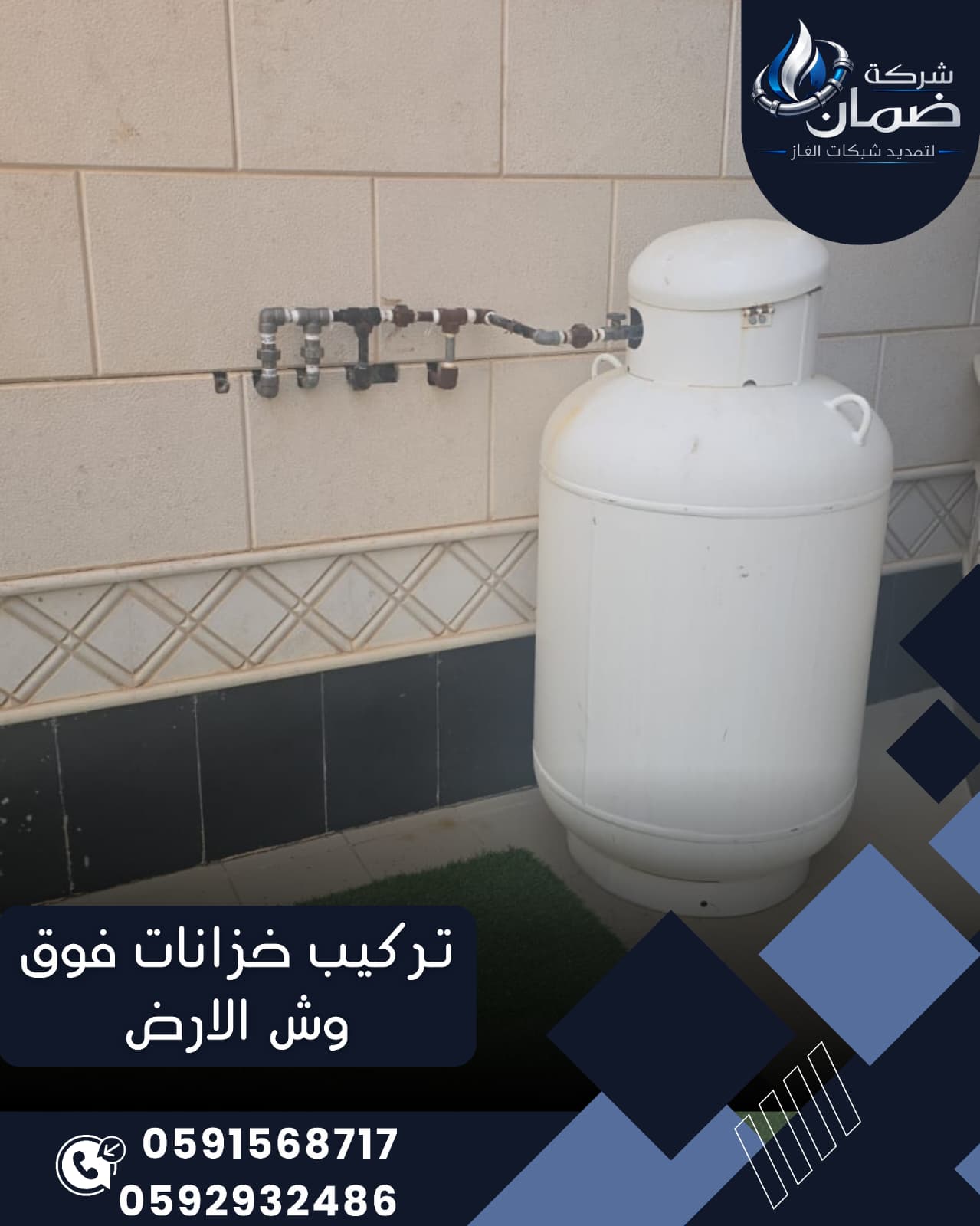
Above-ground gas tanks are among the most widely used solutions for supplying gas to homes, villas, restaurants, and commercial facilities throughout Saudi Arabia because they offer straightforward installation, easier inspection and maintenance, and convenient accessibility whenever servicing is required. However, the success of an above-ground gas storage system does not depend solely on selecting the appropriate tank capacity. It begins with a comprehensive site assessment, compliance with engineering and safety requirements, the use of certified gas tanks, and professional installation performed by experienced specialists. Based on extensive practical experience in gas installation projects, properly engineered and correctly installed above-ground gas tanks provide stable performance for many years while maintaining the highest standards of operational safety, reliability, and long-term efficiency.
Above-Ground Gas Tank Installation
Installing an above-ground gas tank begins long before the tank arrives at the project site. The process starts with a comprehensive engineering site survey that evaluates soil conditions, determines the most suitable installation location, verifies required safety distances from buildings, ignition sources, and traffic areas, and assesses accessibility for future maintenance and gas deliveries. This preliminary engineering study allows specialists to identify the safest possible location while ensuring convenient access for inspection, maintenance, and refilling operations without disrupting normal site activities.
Based on extensive practical experience in gas installation projects, preparing the concrete foundation is one of the most critical stages of the installation process. The foundation must be designed to support the full operating weight of the gas tank when completely filled while maintaining perfect levelness and preventing rainwater from accumulating around the installation area. The tank is then securely anchored using approved fastening methods that prevent movement caused by environmental conditions, while pressure regulators, safety valves, and protective equipment are installed strictly according to the approved engineering design.
The installation process does not end once the tank has been positioned. It also includes connecting the gas distribution network, installing service pipelines, completing pressure testing, performing electronic leak detection, verifying the operation of every safety device, and confirming that the entire system functions correctly before the tank is filled and commissioned for the first time. Every inspection and testing procedure is documented to verify full compliance with applicable engineering and safety standards.
Real-world engineering experience consistently demonstrates that following every stage of the professional installation process significantly reduces future operational failures, improves long-term safety, and guarantees stable gas supply throughout the operational life of the facility.
• Conduct a complete engineering site assessment before installation begins.
• Construct a concrete foundation that complies with approved engineering standards.
• Securely anchor the gas tank according to engineering specifications.
• Install all required safety and protection devices.
• Complete pressure and leak testing before commissioning.
Best Residential Gas Tank
There is no single gas tank that can be considered the best solution for every residential property because the correct selection depends on household consumption, the number of occupants, available installation space, and expected daily gas usage. Choosing the right tank therefore begins with a detailed assessment of actual operational requirements before determining the appropriate storage capacity and selecting a certified tank manufactured according to approved engineering standards that can withstand long-term outdoor operating conditions throughout Saudi Arabia.
Practical engineering experience demonstrates that high-quality gas tanks are manufactured using certified steel, corrosion-resistant protective coatings, approved safety valves, and fully documented quality control procedures. The selected tank should also be fully compatible with the pressure regulation equipment and gas distribution system serving the building to ensure reliable operation and seamless integration with every component of the installation.
Future maintenance requirements should also be considered during tank selection. Choosing a model that allows convenient inspection, servicing, and optional gas level monitoring systems helps reduce future operating expenses while extending the service life of the installation. Careful planning at this stage provides long-term operational reliability and improved safety throughout the life of the gas storage system.
Real-world project experience consistently confirms that investing in a certified, high-quality gas tank from the beginning results in lower maintenance costs, greater operational reliability, and significantly improved long-term safety compared with selecting lower-quality alternatives.
• Select tank capacity according to actual consumption requirements.
• Verify that the tank complies with approved engineering standards.
• Choose corrosion-resistant construction suitable for outdoor environments.
• Ensure compatibility with the building's gas distribution system.
• Consider future maintenance accessibility during tank selection.
Above-Ground Gas Tank Cost
The cost of an above-ground gas tank varies considerably from one project to another because every installation has unique engineering requirements. Final pricing depends upon several technical factors, including storage capacity, manufacturing specifications, steel thickness, installed safety equipment, transportation expenses, installation requirements, engineering testing, and commissioning procedures required before the system enters operation.
Based on extensive practical experience in commercial and residential gas projects, selecting a gas tank solely because it offers the lowest purchase price often results in higher long-term expenses. Low-quality tanks may fail to meet engineering safety standards, provide insufficient storage capacity, or require frequent maintenance and premature replacement. Consequently, purchasing decisions should always be based on engineering value rather than initial purchase cost alone.
The total project budget should also include the concrete foundation, professional installation, pressure regulators, safety valves, gas piping, pressure testing, leak detection, commissioning, and technical inspections because these engineering services are essential parts of a safe and reliable gas storage system rather than optional additions.
Real-world engineering projects consistently demonstrate that professionally installed certified gas tanks provide substantially greater long-term value, lower maintenance costs, improved operational reliability, and significantly higher safety compared with inexpensive installations that fail to meet engineering standards.
• Gas tank pricing depends on storage capacity and technical specifications.
• Never base purchasing decisions solely on initial cost.
• Include installation expenses within the overall project budget.
• Select certified tanks manufactured to approved engineering standards.
• Compare engineering value instead of purchase price alone.
Gas Tank Installation Company
Selecting a specialized gas tank installation company is just as important as selecting the gas tank itself because the quality of installation determines the overall safety, efficiency, and long-term reliability of the entire gas system. A professional company does much more than simply position the tank on-site. It begins by evaluating the customer's operational requirements, conducting a comprehensive site inspection, analyzing environmental conditions, and selecting the safest installation location in full compliance with Saudi engineering standards and safety regulations.
Based on extensive practical experience in gas installation projects, specialized companies rely on qualified engineers and certified technicians to manage every phase of the project. Their work includes constructing the reinforced concrete foundation, positioning and securing the tank, installing the gas distribution network, connecting pressure regulators, fitting safety devices, and completing comprehensive pressure testing, electronic leak detection, and final commissioning. Detailed engineering documentation is also prepared to verify full compliance with all applicable technical and regulatory requirements.
Professional companies continue supporting their customers long after installation is complete by providing preventive maintenance programs, scheduled inspections, emergency response services, and technical assistance whenever system expansion or maintenance becomes necessary. This long-term engineering partnership helps maintain optimal gas system performance while preserving the highest standards of operational safety throughout the service life of the installation.
Real-world engineering experience consistently demonstrates that working with a specialized gas installation company from the very beginning significantly reduces construction errors, shortens project completion times, and greatly improves the long-term safety and reliability of the entire gas storage system.
• Complete installation through qualified engineers and certified technicians.
• Conduct a comprehensive site evaluation before selecting the installation location.
• Perform every required engineering test before project handover.
• Provide scheduled preventive maintenance and periodic inspections.
• Maintain full compliance with Saudi engineering standards and safety regulations.
Gas Tank Installation Requirements
Gas tank installation requirements have been established to ensure safe operation while minimizing operational risks throughout the service life of above-ground gas storage systems. These engineering requirements include selecting a suitable installation location away from ignition sources, maintaining approved safety clearances, constructing a compliant reinforced concrete foundation, installing certified pressure regulators, safety valves, and gas isolation devices whenever required, and ensuring that every component complies with applicable engineering standards.
Based on extensive experience with gas installation projects, many operational problems result from neglecting relatively simple installation requirements. Examples include locating the tank where maintenance access becomes difficult or failing to provide adequate working space around the installation for inspections, servicing, and gas delivery operations. Strict compliance with every engineering requirement from the beginning saves both time and money while eliminating costly modifications after installation has been completed.
Installation requirements also include performing pressure testing, electronic leak detection, and complete inspection of all valves, fittings, and gas connections before the system is commissioned. Every inspection result is documented within the project's technical records to simplify future inspections and regulatory approval procedures.
Practical engineering experience consistently confirms that strict compliance with approved installation requirements significantly improves system reliability while providing a safe and dependable gas storage installation for many years of continuous operation.
• Select an installation site that fully complies with approved safety requirements.
• Maintain all required engineering safety clearances.
• Construct a reinforced concrete foundation according to engineering specifications.
• Perform pressure and leak testing before commissioning.
• Document every stage of construction and inspection.
Gas Tank Installation Location
Selecting the correct location for an above-ground gas tank is one of the most important engineering decisions affecting the safety and long-term performance of the entire gas distribution system. An unsuitable installation location may complicate maintenance procedures, reduce operational efficiency, or increase potential safety risks. Consequently, engineers carefully evaluate soil conditions, building access, traffic movement, gas pipeline routes, and accessibility for gas delivery vehicles before determining the final installation location.
Based on practical engineering experience, the ideal installation location provides excellent natural ventilation while maintaining safe distances from ignition sources, electrical equipment, building openings, and occupied areas in accordance with approved engineering standards. Proper location planning substantially reduces operational risks while improving the long-term efficiency and safety of the gas storage system.
The installation site should also allow unrestricted access to pressure regulators, valves, safety devices, and inspection points without requiring equipment removal or disrupting normal facility operations. This thoughtful engineering approach simplifies maintenance activities and significantly improves emergency response whenever servicing becomes necessary.
Real-world engineering projects consistently demonstrate that selecting the correct installation location from the beginning represents one of the most important factors contributing to the overall success, safety, and reliability of the entire gas system.
• Select a well-ventilated outdoor installation area.
• Maintain safe distances from ignition sources.
• Ensure convenient access for inspection and maintenance.
• Allow unobstructed access for gas delivery operations.
• Fully comply with all engineering safety clearance requirements.
Certified Gas Tank Specifications
The quality of a gas tank cannot be judged solely by its external appearance. Instead, it depends on a comprehensive set of engineering specifications that determine whether the tank can operate safely and reliably under long-term service conditions. These specifications include high-quality certified steel construction, corrosion-resistant protective coatings, approved safety valves, compatible pressure regulation equipment, and successful completion of all required manufacturing inspections and quality assurance testing before the tank enters service.
Based on extensive engineering experience in commercial and residential gas projects, certified gas tanks must carry documented compliance certifications demonstrating that they have been manufactured according to recognized engineering standards capable of withstanding operating pressure, environmental conditions, and long-term outdoor exposure. Every accessory installed on the tank must also be fully compatible with the storage system, and uncertified replacement components should never be used because they may compromise operational safety.
These engineering specifications significantly extend the service life of the gas tank, reduce long-term maintenance costs, improve the reliability of the gas distribution system, and maintain stable operating performance even under demanding environmental conditions and continuous daily operation.
Practical engineering experience consistently demonstrates that selecting a fully certified gas tank from the beginning represents a long-term investment in safety, operational quality, reliability, and reduced lifecycle costs.
• Select gas tanks manufactured according to approved engineering standards.
• Use only certified materials and compatible safety equipment.
• Verify manufacturing certifications before installation.
• Choose corrosion-resistant construction for long-term durability.
• Invest in certified engineering quality for maximum operational reliability.
Appropriate Gas Tank Capacity
Selecting the appropriate gas tank capacity is one of the most important decisions affecting the efficiency of a gas distribution system and its long-term operating costs. A tank that is too small may require frequent refilling, interrupt operations, and create unnecessary logistical challenges, while a tank that is significantly larger than required may increase project costs without providing any meaningful operational benefit. For this reason, determining the proper tank capacity should always begin with a professional engineering assessment that evaluates actual gas consumption, the number of gas-powered appliances operating simultaneously, the nature of the facility, daily operating hours, and any anticipated future expansion.
Based on extensive practical experience in gas system design, determining tank capacity should never rely solely on the size of the building. Instead, engineers calculate the total thermal load of every gas appliance, evaluate average and peak daily consumption, estimate refill intervals, and determine the storage volume required to ensure continuous gas supply without pressure fluctuations during periods of maximum demand.
Professional engineering practice also recommends incorporating sufficient reserve capacity to accommodate future expansion without requiring complete replacement of the storage tank. This forward-thinking approach reduces future capital expenses while giving property owners greater operational flexibility as their gas demand increases over time.
Real-world engineering experience consistently demonstrates that selecting the correct tank capacity through detailed engineering calculations provides stable gas supply, reduces operating expenses, minimizes unnecessary refill frequency, and improves the overall efficiency of the gas distribution system throughout the service life of the installation.
• Calculate tank capacity according to actual gas consumption.
• Consider the number of appliances operating simultaneously.
• Estimate annual gas refilling frequency.
• Allow sufficient reserve capacity for future expansion.
• Base tank selection on a professional engineering study.
Maintenance of Above-Ground Gas Tanks
Routine maintenance of above-ground gas tanks is one of the most important factors in preserving system safety and maintaining long-term operational efficiency because these tanks remain continuously exposed to sunlight, rain, humidity, dust, and changing weather conditions. Over time, environmental exposure may affect various system components if regular maintenance is neglected. Preventive maintenance is therefore intended not only to repair existing problems but also to identify developing issues before they become operational or safety concerns.
Based on extensive practical experience, maintenance begins with a detailed inspection of the tank's exterior structure, verifying the condition of the protective coating, checking for signs of corrosion or deterioration, inspecting pressure regulators, valves, and safety devices, and confirming that every protective component continues to function correctly. Engineers also verify that the tank remains securely positioned on its concrete foundation and inspect every connection for signs of leakage or mechanical damage.
Maintenance procedures also include cleaning the surrounding installation area, ensuring that adequate ventilation remains unobstructed, maintaining unrestricted access to valves and inspection points, and performing pressure testing together with electronic leak detection using certified testing equipment. Every inspection is documented in detailed engineering reports that provide a complete maintenance history while supporting future maintenance planning.
Real-world engineering projects consistently demonstrate that following a structured preventive maintenance program significantly extends the service life of above-ground gas tanks, minimizes unexpected operational failures, and preserves the highest standards of safety throughout continuous operation.
• Inspect the exterior structure on a scheduled basis.
• Examine pressure regulators and safety valves regularly.
• Test every installed safety device.
• Keep the installation area clean and accessible.
• Prepare detailed maintenance reports after every inspection.
Gas Tank Inspection Before Commissioning
Inspecting a gas tank before commissioning represents the final and most important stage before the system enters operation because it confirms that every component functions according to engineering specifications and that the complete installation is fully prepared for safe service. This process extends far beyond a simple visual inspection and includes a comprehensive series of engineering tests covering the storage tank, gas distribution network, valves, pressure regulators, safety devices, and every operational component within the system.
Based on extensive engineering experience, the commissioning process begins with pressure testing to verify the integrity of the complete gas distribution network and confirm that no gas leakage exists anywhere within the installation. Engineers then inspect every valve, regulator, fitting, and protective device while verifying the correct operation of all pressure regulation equipment. Gas detection systems, when installed, are also tested and integrated with automatic shut-off equipment to ensure coordinated emergency response.
After all inspection procedures have been successfully completed, engineers perform a full operational commissioning test under real working conditions. During this process, operating pressure is continuously monitored while verifying that gas is delivered efficiently and consistently to every point of use throughout the facility. A comprehensive engineering report is then prepared confirming that the complete installation fully complies with applicable technical standards and is ready for safe operation.
Practical engineering experience consistently demonstrates that comprehensive pre-commissioning inspections prevent many operational problems that would otherwise appear after the system enters service while significantly improving long-term operational safety and reliability.
• Perform pressure testing before filling the gas tank.
• Inspect every valve and protective device.
• Verify every gas connection with precision.
• Complete full operational commissioning before handover.
• Document every inspection and testing procedure.
Why Is Guarantee Gas the Best Gas Installation Company in Saudi Arabia?
Guarantee Gas Company is one of Saudi Arabia's leading specialists in the design, installation, and maintenance of above-ground gas storage systems for homes, villas, restaurants, commercial facilities, and industrial projects. Every installation begins with a comprehensive engineering study that evaluates site conditions, determines the appropriate tank capacity, and designs the complete gas distribution system according to the highest Saudi engineering and safety standards.
The company employs experienced engineers and certified technicians who supervise every stage of the project, including concrete foundation preparation, tank installation, gas piping, pressure regulator installation, safety equipment integration, pressure testing, electronic leak detection, and final commissioning before project handover. Every component used throughout the installation complies with approved Saudi technical specifications.
Guarantee Gas also provides scheduled preventive maintenance, routine tank inspections, emergency technical support, engineering consultations, and assistance with future system expansion or tank replacement whenever operational requirements change. The company's commitment to quality, engineering excellence, and strict regulatory compliance ensures that every customer receives a safe, efficient, and highly reliable gas storage solution.
Through years of successful engineering projects, exceptional workmanship, and complete adherence to Saudi safety regulations, Guarantee Gas has become one of the most trusted choices for homeowners, restaurants, commercial facilities, and industrial clients seeking professionally engineered gas storage installations.
• Evaluate the project before selecting the tank type and capacity.
• Perform professional installation according to Saudi engineering standards.
• Complete pressure testing, leak detection, and commissioning before handover.
• Provide scheduled maintenance and continuous technical support.
• Maintain complete compliance with the highest safety and quality standards.
Conclusion
Above-ground gas tanks provide a practical, highly reliable, and safe gas storage solution when they are professionally designed, correctly installed, and maintained according to recognized engineering standards. Their long-term performance depends upon selecting the proper storage capacity, complying with installation requirements, performing regular inspections, and relying on qualified specialists for every stage of the project. By working with Guarantee Gas Company, property owners receive a complete engineering solution that begins with detailed planning and concludes with a fully certified gas storage system delivering safe, dependable, and efficient performance for many years.
Frequently Asked Questions
Where is the best location to install an above-ground gas tank?
The ideal location is a well-ventilated outdoor area that complies with all required safety clearances while providing convenient access for gas deliveries, inspections, and maintenance.
How is the correct gas tank capacity determined?
Tank capacity is calculated according to actual gas consumption, appliance demand, operational requirements, and anticipated future expansion.
Do above-ground gas tanks require regular maintenance?
Yes. Scheduled maintenance is essential for inspecting the tank, valves, pressure regulators, and safety devices while ensuring reliable long-term operation.
What is included in the pre-commissioning inspection?
The inspection includes pressure testing, leak detection, examination of valves, pressure regulators, safety equipment, and complete operational commissioning before the system enters service.
Can an above-ground gas tank be installed anywhere?
No. The installation location must comply with engineering safety requirements, approved separation distances, and ventilation standards established by Saudi regulations.
What is the expected service life of an above-ground gas tank?
Service life depends on manufacturing quality, environmental conditions, proper installation, and consistent preventive maintenance throughout the operational life of the system.
Why should I choose Guarantee Gas Company?
Guarantee Gas provides comprehensive engineering design, professional installation, certified testing, preventive maintenance, and ongoing technical support while maintaining full compliance with Saudi engineering standards, ensuring safe, reliable, and long-lasting gas storage systems.